Supermodels aren’t what they used to be. Really, not even close.
There was a time when to be a supermodel was like being one of the Seven Samurai, a catwalk A-Team or the fashion equivalent of Clive Lloyd’s West Indians of the 1970s – where every player was a star.
It was elite.
Way back in the golden era of supermodels in the 1990s it meant something different. The best models were cover girls for Vanity Fair, Vogue or later Sports Illustrated. They fought for those covers. It was a big deal. And they were distinct. They each fit a niche and in a way there differences complimented each other as well as the idea of beauty being diverse.
They also seemed to have more interesting lives, hailing from every corner of the globe, mixing with stars, musicians, artists, clubbing at Studio 54, marrying tycoons and divorcing them.
Today’s supermodels are stars of social media, their currency measured in followers and shares, and the iconic images by photographers like David Bailey, Mario Testino or Annie Leibovitz replaced with a selfie from an iPhone 6.
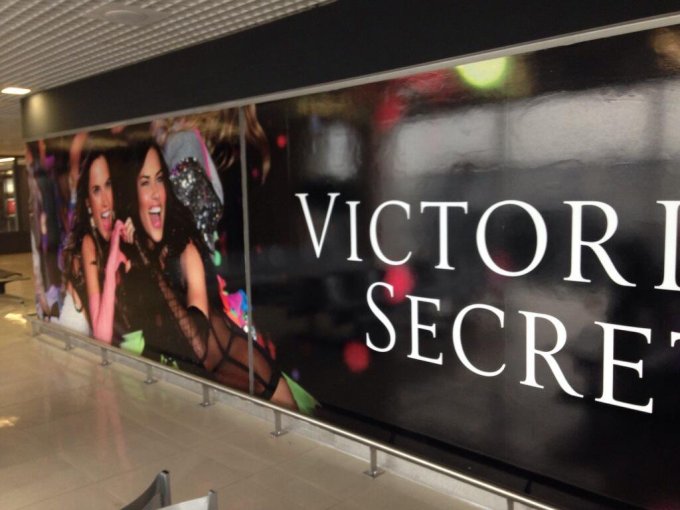
In fact the term doesn’t really mean anything anymore. In today’s parlance anyone who’s earnt their ‘wings’ as a Victoria’s Secret model is dubbed ‘super’.
And the lingerie firm and its online following has set the agenda for what a supermodel should look like – a kind of pornified girl next door – pouting, fair-skinned and up for a party.
Elegance? What’s that.
The progression of modelling through the latter part of the 20th century to today from overwear to swimwear to underwear (heading to no wear) has been driven by the internet and the easy sexualisation of both women and men that has come with it.
You don’t hear much about former supermodel Cindy Crawford anymore, but last week she quietly announced her retirement.
It’s an entirely different ball game today and she knows it, no matter how stunning she still looks at 50.
In her, not that distant, heyday though she shared a world stage with Claudia Schiffer, Tyra Banks, Gisele, Elle MacPherson, Christie Brinkley, Naomi Campbell, Rachel Hunter, Linda Evangelista, Heidi Klum, Eva Herzigiova, Kate Moss and Helena Christensen.
These women strode like giants through the industry, having emerged from an even more elite pack of high fashion models like Lauren Hutton, Iman, Jerry Hall, Janice Dickinson and Marie Helvin.
The emphasis throughout all their careers was on the vast wealth of the fashion industry, of magazines and their influential owners, and on the power of good photography.
But magazines, the patrons of fashion photography, are now struggling, and Harper’s Bazaar’s nude cover of Miranda Kerr in December reflected how heavily the internet and social media now influence the mainstream industry.
And the new star supermodels – Kendall Jenner, Kate Upton – are bypassing traditional modelling routes, coming to the game as social media ’influencers’.
To advertisers their Instagram accounts are the new rivers of money, where brands can be sold direct to the public.
And maybe this is a better thing for giving models – so long at the beck and call of an unforgiving industry – more control.
But when I hear the term ‘supermodel’ mentioned in relation to a rising social media star I’ve never heard of, or Miranda Kerr or Rosie Huntington-Whiteley while they strain desperately to find some grown-up curves, or just to stumble across a billboard of homogenous looking Victoria’s Secret ‘Angels’, I do yearn for the day when you knew what you were getting in a supermodel and invariably it was awesome.
 rtg
rtg 