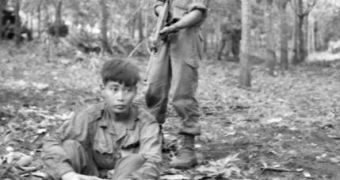
We call it the Vietnam War, but in that country it’s popularly known as the Resistance War Against America or the American War.
It has never in Vietnam been regarded as a noble confrontation between two legitimate foes, but a tooth and nail fight for survival against a foe seeking nothing less than subjugation.
That’s why the decision by its government to limit Australian involvement in a memorial service commemorating the 50th anniversary of the Battle of Long Tan should not be such a surprise to us.
While the Vietnamese have been more keen than anyone to put the 20-year war behind them, that doesn’t mean its forgotten and it doesn’t mean the repercussions from it are still not felt.
It’s estimated close to 600,000 civilians were killed in the war, many in intensive carpet bombings of small villages. Military deaths on the North Vietnamese side are estimated between 444,000 and 1.1 million. The South Vietnamese, fighting with the allies, lost between 220,000 and 313,000 soldiers. Over 1.5 million civilians and fighters were wounded.
By comparison around 58,000 US troops died and 521 Australians.
For 10 years from 1961-1971 the US dumped millions of gallons of toxins on the country to defoliate jungle areas and reduce hiding places for the North Vietnamese. It affected some 5 million people. To this day children are still being born with deformities attributed to the long-term affects of Agent Orange, while those directly exposed to it have suffered from cancer, skin and nervous disorders, liver damage and heart disease.
Though the war ended in 1975 tough economic embargoes imposed by the US lasted until 1995, further damaging the country.
It’s a human right to grieve, no one should be denied it. But it’s difficult for us as a nation, Vietnamese Australians excepted, to properly understand the turmoil and destructiveness of that war to the people of Vietnam, Cambodia and Laos.
Our own perspective has been very different, watched from afar.
The after affects for us, our soldiers dealing with post traumatic stress while serious and significant, pale alongside the suffering experienced by the Vietnamese.
There is nothing malicious or deliberately insensitive about Australia’s view of the war, but we just can’t know what they know.
The Vietnamese for decades have facilitated good relationships with Australian war veterans. They have shown they not only don’t have a problem with Aussie war vets memorialising our soldiers deaths, but they have also helped us do it.
Matters came to an uncomfortable head on Thursday over the involvement of 1,000 Australian mourners at the Long Tan ceremony, which the Vietnamese government cancelled in favour of a smaller service.
It didn’t happen because of the Vietnam government’s insensitivity to our soldiers, more their sensitivity to the history of their own people and how they have been treated by foreign countries, including the imperial regimes of China and France.
Despite the Australian government’s claim the Long Tan ceremony had been agreed well beforehand, it is clear the large number of Australians planning to visit the site was felt to be inappropriate. Instead small groups were let in.
Some Australians reacted with outrage at the decision. Veterans associations described it as a “kick in the guts”. The Turnbull government jumped into negotiate a compromise. But not much could be done. A raw nerve had been hit.
In Turkey, the annual memorial to the Australian fallen at Gallipoli has become a significant and large scale pilgrimage by Australians. Super-sized TV screens are set up around the site as thousands of Australians journey there.
The Turks themselves have been incredibly magnanimous. They appreciate the significance to Australians of this battle above all others in any war we have fought in. They were also the victors on that occasion, repelling the Allied invasion, and a century after it happened few, if any, are left alive who remember it.
I don’t doubt the Vietnam government wants to avoid a similar scenario where the grief of the Vietnamese is overshadowed by large numbers of Australians mourning the deaths of our own war dead – and at Long Tan that was 18 soldiers.
It is a matter of perspective.
In Australia’s enthusiasm to reconcile past conflicts and to gain a degree of closure for our veterans we perhaps don’t get how that war affected Vietnam and how it still resonates with them, in a way that is very different from us or from events in WWI.
The reaction to the Long Tan anniversary is a reminder to us that the right of a people to grieve and memorialise their past in their own country outweighs our right to travel there and do the same.
As a nation we need to appreciate the wounds of Vietnam run deep on both sides.
 rtg
rtg 