Call the term ‘disruption’ what it really is – cheating

It’s a term that has been tediously shoved down our throats for the past few years like a mantra — ‘disruption’.

Like “innovator” or “agile”, it often accompanies ­descriptions of new tech start-ups shaking up the traditional system, but has also become a sort of shorthand for ignoring the rules.

This, we’ve been encouraged to think, is something we should be grateful for — lifting us out of our ­ignorant ways — rather than what it often is: a cheat.

Disruption is nothing new. It has always been a feature of business growth and of society’s evolution. We just didn’t call it that.

We knew it by other less dramatic terms, like best practice, change or improvement.

The repackaging of the word “disruption” as something new and radical is akin to the recent attempt by a Newcastle cafe to dress up Vegemite on toast as some kind of a la carte offering.

It’s like your coffee being more ­expensive because it’s served by an uncommunicative, apron-wearing bloke with a waxed moustache.

Hans Christian Andersen nailed it back in 1837: The Emperor’s New Clothes.

It is nothing more than what university professors might describe as a postmodern deconstruction of what occurs in the business world everywhere and always has.

When you can get away with it.

Because the main benefit for the businesses reaping enormous profits on the back of the ideology of “disruption” has been to bypass the usual rules.

The disrupters of the world, from Uber to the firms responsible for all those discarded bicycles in your street and clogging up waterways, have used loopholes to bamboozle authorities into accepting a system of reduced or vanquished standards.

So while the poor Luddites of our taxi industry, constrained by regulations designed to both ensure public safety and keep the taxman happy, are having the values of their business slashed and their livelihoods diminished, Uber merrily undercuts the market to drive out the opposition.

Despite grabbing a lion’s share of the world taxi business by “disrupting” traditional services with lower fares and untrained “citizen” drivers, studies show Uber X drivers earn half the minimum wage.

For a company that has never been in profit (it lost $4.5 billion last year) you can bet fares will rise once it has no one left to compete with.

This week the House of Representatives voted to ban Lottoland, a “synthetic” lottery that, rather than having a cash jackpot at its disposal, bets on the outcome of big lotteries and uses insurers to pay off whatever large wins (effectively losses) it incurs.

It is based in the tax haven of ­Gibraltar and, unlike existing lotteries that help fund charities, it pays no tax.

While it lists donating to charity on its website, most of those “donations” are actually sponsorships whose primary purpose is to advertise Lottoland.

At the same time newsagents, ­already under strain from diminished sales, have lost revenue they would get through traditional lotteries.

In less than 25 years Amazon, the e-commerce juggernaut, has made its founder Jeff Bezos $112 billion and the richest person in the world.

It is a new arrival here, but in America, where the company made $5.6 billion last year, it paid no tax at all.

Social networks meanwhile have used “freedom of speech” as a way to dodge responsibility for removing inappropriate content, while at the same time harvesting our data for profit and manipulating the information we receive.

Tuesday night’s Budget foreshadowed a raft of new measures to stop companies like Amazon, Facebook, Google and Apple from shifting profits offshore and shirking paying tax here.

With barely a complaint from a public mesmerised by their shiny ­offerings, these companies have raided the retail landscape like plundering Vikings.

I’m all for progress and not for maintaining institutions that don’t work, but I’m also pretty sure when the smoke clears we are going to find we are paying the same and getting less, and a few shrewd companies will have made a mint at our expense.

(Originally published in The Daily Telegraph)

It’s not all fun and games in social media

They say imitation is the sincerest form of flattery, but in the super-competitive world of social media the copycats go for the kill.

In digital, where the cost of developing products of your own is increasingly weighed up against that of simply mimicking someone else’s successful idea, a war is being waged over selfie filters.

At stake is the future of Facebook and Instagram, and the growing monopolies they control.

Because to stay relevant beyond the generation of millennials that have hoisted them up among the world’s most lucrative and influential companies they are desperate for a younger demographic.

Pioneered by Snapchat, filters (quirky, fun graphics superimposed on photos and videos) are in mobile phone terms the addictive equivalent to young people of making slime, collecting Shopkins or worshipping unicorns.

Four years ago Mark Zuckerberg offered $3 billion for the company in an “if you can’t beat them, buy them” approach, but was turned down. Since then things have turned nasty.

Evan Spiegel’s Snapchat app facially maps features and dubs them with moving graphics such as rabbit ears or sunglasses. Music and other special ­effects add to the variety.

They have been an enormous success for the company, recently valued at $30 billion, as were their “Stories” posts that lasted for 24 hours.

All of these features have been unashamedly imitated by their rivals.

Facebook and Instagram (which Facebook owns) even took the same name “Stories” for their daily picture and video collections. And by doing so they’ve eaten into Snapchat’s value and arrested its progress.

Instagram’s copycat filter has been so successful it boasts 200 million daily users, more than Snapchat’s.

Those waking up to Instagram’s new filters yesterday could not have failed to notice some appeared to be virtual copies of Snapchat.

As intellectual property rights expert Kimberlee Weatherall, from Sydney Uni’s law department, says: “No one gets to own a good idea.”

She added: “When it comes to competing over a great business idea there is no IP, no trademark, no Passing Off law that applies.”

But Snapchat isn’t the only trendsetter and ideas leader in the sights of Facebook and Instagram.

The company’s live video streaming functionality has already driven the originator, Meerkat, out of the market and blown its key competitor, Twitter’s Periscope, out of the water.

Using their enormous global audiences, Facebook and Instagram are increasingly flexing their muscles to drive competitors out of business and to even influence the news cycle.

Jonathan Taplin, author of Move Fast and Break Things: How Facebook, Google and Amazon have ­Cornered Culture, said yesterday: “Data is king… and they are in control of it.”

(Originally published in The Daily Telegraph)
What’s become of the supermodel? How social media undressed the fashion industry

Supermodels aren’t what they used to be. Really, not even close.

There was a time when to be a supermodel was like being one of the Seven Samurai, a catwalk A-Team or the fashion equivalent of Clive Lloyd’s West Indians of the 1970s – where every player was a star.

It was elite.

Way back in the golden era of supermodels in the 1990s it meant something different. The best models were cover girls for Vanity Fair, Vogue or later Sports Illustrated. They fought for those covers. It was a big deal. And they were distinct. They each fit a niche and in a way there differences complimented each other as well as the idea of beauty being diverse.

They also seemed to have more interesting lives, hailing from every corner of the globe, mixing with stars, musicians, artists, clubbing at Studio 54, marrying tycoons and divorcing them.

Today’s supermodels are stars of social media, their currency measured in followers and shares, and the iconic images by photographers like David Bailey, Mario Testino or Annie Leibovitz replaced with a selfie from an iPhone 6.

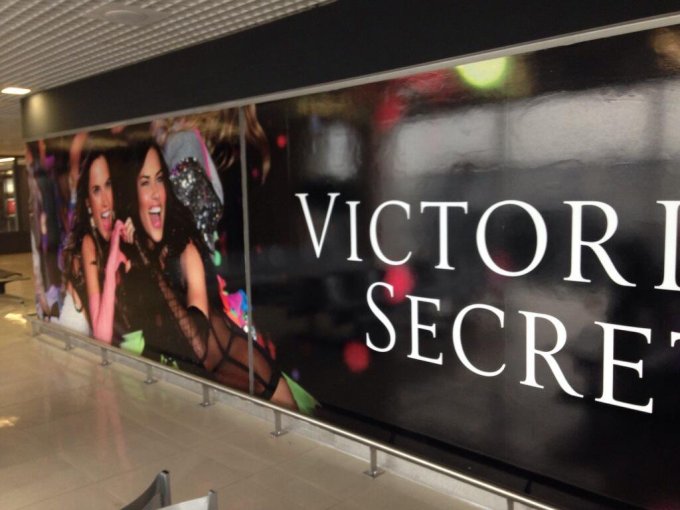
In fact the term doesn’t really mean anything anymore. In today’s parlance anyone who’s earnt their ‘wings’ as a Victoria’s Secret model is dubbed ‘super’.

And the lingerie firm and its online following has set the agenda for what a supermodel should look like – a kind of pornified girl next door – pouting, fair-skinned and up for a party.

Elegance? What’s that.

The progression of modelling through the latter part of the 20th century to today from overwear to swimwear to underwear (heading to no wear) has been driven by the internet and the easy sexualisation of both women and men that has come with it.

You don’t hear much about former supermodel Cindy Crawford anymore, but last week she quietly announced her retirement.

It’s an entirely different ball game today and she knows it, no matter how stunning she still looks at 50.

In her, not that distant, heyday though she shared a world stage with Claudia Schiffer, Tyra Banks, Gisele, Elle MacPherson, Christie Brinkley, Naomi Campbell, Rachel Hunter, Linda Evangelista, Heidi Klum, Eva Herzigiova, Kate Moss and Helena Christensen.

These women strode like giants through the industry, having emerged from an even more elite pack of high fashion models like Lauren Hutton, Iman, Jerry Hall, Janice Dickinson and Marie Helvin.

The emphasis throughout all their careers was on the vast wealth of the fashion industry, of magazines and their influential owners, and on the power of good photography.

But magazines, the patrons of fashion photography, are now struggling, and Harper’s Bazaar’s nude cover of Miranda Kerr in December reflected how heavily the internet and social media now influence the mainstream industry.

And the new star supermodels – Kendall Jenner, Kate Upton – are bypassing traditional modelling routes, coming to the game as social media ’influencers’.

To advertisers their Instagram accounts are the new rivers of money, where brands can be sold direct to the public.

And maybe this is a better thing for giving models – so long at the beck and call of an unforgiving industry – more control.

But when I hear the term ‘supermodel’ mentioned in relation to a rising social media star I’ve never heard of, or Miranda Kerr or Rosie Huntington-Whiteley while they strain desperately to find some grown-up curves, or just to stumble across a billboard of homogenous looking Victoria’s Secret ‘Angels’, I do yearn for the day when you knew what you were getting in a supermodel and invariably it was awesome.

New Literalism: How internet misfittery is warping the news

Someone apologised on Tuesday, although they hadn’t done anything wrong.

Unusual you might say, but it’s something we’re going to see a lot more of.

The reason for that is we have come to a time when misinformation, supposition and the tidal bores of online outrage are treated in the media with the same reverence as fact – provided they have an audience.

In the massively expanded and ever expanding world of online social networking and commentary there is now a sizeable section of the community who take everything they find on the internet at face value and who do not inquire. This amorphous, shape-shifting group regards what they see online, mistakes and all, literally and farms it out as fact to their connections.

Context has been thrown away for many people online and in its place is a new and dangerously ignorant reality.

By the time art collector Dasha Zhukova issued her grovelling apology on Tuesday afternoon for having been photographed sitting on a Bjarne Melgaard chair in the form of a black woman, millions of people around the world had already got a completely wrong opinion of her.

It was fuelled by the media, who reported the ‘outrage’ of regular people, which it then stoked and re-reported on. Many publishers seemed to leave out crucial information that would have explained the context of the photo, perhaps to not diminish the suggestion of racism.

Some punters even thought the chair was a real woman, made to pose semi-naked in subjugation.

And as if the existence of the picture, published digitally on the pop culture website Buro 24/7 about Garage magazine (of which Zhukova is editor), might not be enough to stir people up, others proffered that it had been doubly offensive coming on Martin Luther King Day (or MLK Day).

Nevermind that this was a Russian website and MLK Day is only celebrated in the US, and oddly Hiroshima and Toronto, and that elsewhere in the world few people are aware of it.

Online those boundaries are forgotten and made indistinguishable.

The digital community in the US, and quick to follow the media, quickly concluded this was some added racist slight by backward Europeans.

And because of this US-centric addition to the controversy the rest of the world suddenly was given the impression that the entire event had occurred in America rather than in cyberspace somewhere over the Urals.

Few people saw it for what it was – an edgy piece of political art designed to underline Zhukova’s serious industry credentials as a collector of modern art.

Not everyone’s cup of tea, sure, but not a malicious or even clumsy act of bigotry.

Created by the New York-based Norwegian artist and sculptor Bjarne Melgaard the piece first appeared at a Paris exhibition last year, titled Empire State, New York Art Now.

Because it deliberately and closely referenced the 1960s forniphilia (human furniture) works of British sculptor Allen Jones, who created similar works with white women as subjects, it was not at the time regarded as racist.

At the height of Pop Art Jones, now aged 76, created a series of furniture pieces based on bound white women, that inspired the sexualised female props in Stanley Kubrick’s A Clockwork Orange.

But in Tuesday’s digital furore few knew this or bothered to find it out. Instead this one unexplained picture fuelled a completely unnecessary racism row.

Zhukova, the partner of billionaire Roman Abramovich, and the publishers of Buro 24/7 fell on their swords, aware once the ball was rolling no sensible explanation would be enough to satisfy the online hornets’ nest that had been stirred up. While drawing a line under it their apologies, though, only gave those way-off claims of racism the appearance of credibility.

On Wednesday, the story is front page news and the truth even more obscured amidst the blustering, ignorant hubbub.

But this is hardly an isolated incident.

Increasingly misinformation peddled online is being repeated enough to make people believe it. And if enough people believe it the media starts to report it as though it were real.

In the past week a picture reportedly of a Syrian child sleeping between the graves of his parents swept the internet. It seemed to perfectly and dramatically underline the futile loss of lives in the Syrian conflict and further condemn the country’s leadership.

The only problem was it wasn’t a Syrian child and they weren’t graves. The picture set up and taken in Saudi Arabia by an artist had been appropriated because it fit the subject matter the original disseminator wanted to convey.

When photographer Abdul Aziz al Otaibi contacted the person who had first deliberately misrepresented it on Twitter as an example of Syrian atrocities, the response he got was: “Why don’t you just let go and claim it is a picture from Syria and gain a reward from God.”

The damage, in any case, had already been done with more people viewing the viral image than will ever read the truth about it.

On a less important level this week there was also the ‘bikini bridge’ hoax, picked up by the mainstream media as fact.

Writing in the Telegraph, Radhika Sangani noted: “Apparently all it takes for the internet to believe something is a trend is a few celebs tweets, blog posts and a hashtag.. behind all of this is something much darker: we all believed it because it sounds plausible.”

And commenting on the number of hoax YouTube videos reported as fact in the press last year Caitlin Dewey in the Washington Post described 2013 as “the year the media decisively elevated social media phenomenon, real or imagined, to the level of actual news”.

She cited the cheapness of sourcing it, the growth of social media and the lust for page views – tactics pioneered by high turnover news sites like Mail Online.

The often valueless sourcing of opinion from Twitter has meant you can find anyone online for comment on a particular angle to a story.

Gone are the days where a journalist would always seek out an expert in a field for their view. Now they take their pick from any number of anonymous postings, no matter how ill-informed, biased or stark-raving mad they are.

Reaction, any reaction, is reportable, no matter how right or wrong it is.

And now that everyone has a voice to express themselves the new literalists even make objections to the use of metaphors. No article can run online today describing a rivalry as a ‘war’ without several po-faced readers commenting self-righteously that war is nothing like that and the author’s an idiot for suggesting it.

The value of harnessing an online audience for news outlets has never been greater. We now measure the success and therefore the value of companies by the membership or readership they command. And it is so large now papers and broadcasters are unable to preclude it from mainstream news.

Unfortunately the upshot is facts, context and the full story have increasingly become a casualty.

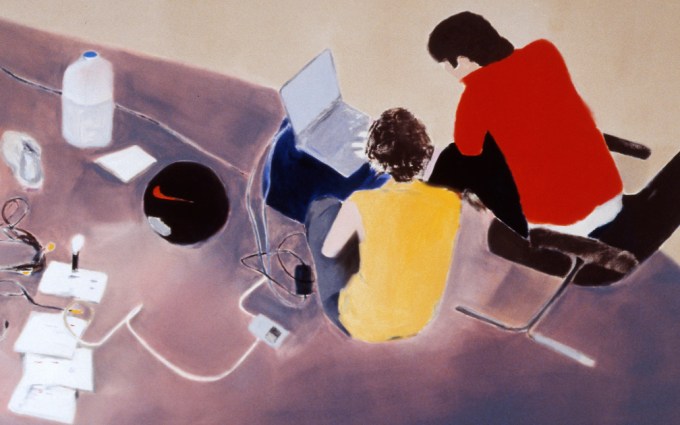
(Originally published in The Huffington Post. Illustration: Internet Painting by Miltos Manetas)