We’re all in this together

Time catches up with you. Fast.

I recall fragments of conversations with Heather. Happy, optimistic, edgily anarchic interactions. Her, splattered in paint.

At high school there were two teachers who made a big difference for me and the way I saw the world.

One, Mike Willis, taught English and swaggered around like a cowboy.

‘Just get on with it,’ was his barked catchphrase. For a man with a big heart it surprised everyone when it stopped abruptly in his mid-50s.

Wise, even as a relatively young bloke, at school he was an ally as much as an educator.

When I visited his wife Denise a year after his death, Mike’s car keys and wallet had been left in the same spot on the kitchen counter where he had last put them down.

His car, parked on the front lawn, had not been moved. Grass grew high under the wheel arches.

The heart is slow to heal.

This week I learned of the death of the other influence in my school life.

Heather Pulsford taught me art, but more than that was a like-mind, a sounding board and a friend.

She was that way not just to me, but to many people in her life and among the arts community that was her stomping ground.

I last saw her two years ago. By then, quite old, Heather had been sick for a while and was using a ventilator at night to breathe while she slept.

Still fiery in her manner, she was nonetheless frustrated at being so constrained.

For a woman with a big brain and a need to be busy all the time, and to socialise with others, it was a devastating come down.

Weakened by pneumonia she succumbed in a hospital on the South Coast with her family around her.

A public Facebook post on her death has been inundated with tributes from friends, family, the community and her former students.

I know she will have sensed that sweeping wave of support even as she was bed-bound and cursing being let down by her body and her health.

In the news we usually only hear stories about the wrong type of relationships that go on between teachers and students.

But most of us benefit in our childhood from those few genuine mentors that take an interest in you at a time in which you struggle with a growing sense of both your independence and isolation.

Those internal monologues we all have, echo too infrequently in the spoken ruminations of others.

Some like to say ‘the universe will provide’ – but it does more than that. The universe wants us to succeed.

And, I don’t feel by coincidence, it puts people in our way that help us grow and that sustain us through the hard times to come.

We have these people dotted around us: at school, at work, in our family, among our friends and loves.

The abiding theme that religion and science seems to agree upon is that there is a destiny to life, no matter how we interpret that.

We are made to go forward, to create and build, to better ourselves and along the way help others do the same.

It’s not teamwork, it’s community, whether large or small.

When I was a kid, Heather was part of my little community and I thank her for sending me spinning off in the right direction.

(Originally published in The Daily Telegraph)

Call the term ‘disruption’ what it really is – cheating

It’s a term that has been tediously shoved down our throats for the past few years like a mantra — ‘disruption’.

Like “innovator” or “agile”, it often accompanies ­descriptions of new tech start-ups shaking up the traditional system, but has also become a sort of shorthand for ignoring the rules.

This, we’ve been encouraged to think, is something we should be grateful for — lifting us out of our ­ignorant ways — rather than what it often is: a cheat.

Disruption is nothing new. It has always been a feature of business growth and of society’s evolution. We just didn’t call it that.

We knew it by other less dramatic terms, like best practice, change or improvement.

The repackaging of the word “disruption” as something new and radical is akin to the recent attempt by a Newcastle cafe to dress up Vegemite on toast as some kind of a la carte offering.

It’s like your coffee being more ­expensive because it’s served by an uncommunicative, apron-wearing bloke with a waxed moustache.

Hans Christian Andersen nailed it back in 1837: The Emperor’s New Clothes.

It is nothing more than what university professors might describe as a postmodern deconstruction of what occurs in the business world everywhere and always has.

When you can get away with it.

Because the main benefit for the businesses reaping enormous profits on the back of the ideology of “disruption” has been to bypass the usual rules.

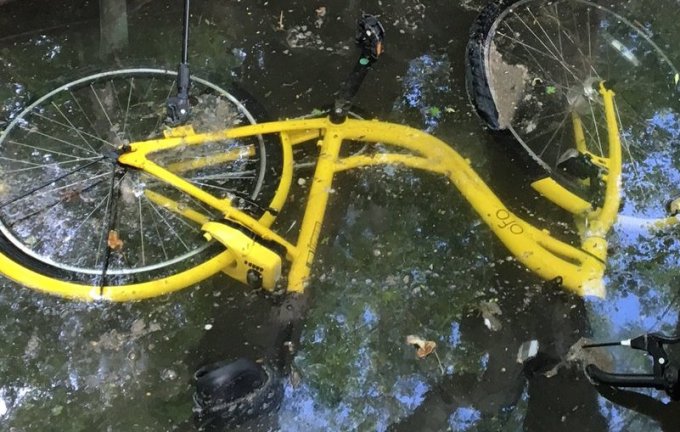
The disrupters of the world, from Uber to the firms responsible for all those discarded bicycles in your street and clogging up waterways, have used loopholes to bamboozle authorities into accepting a system of reduced or vanquished standards.

So while the poor Luddites of our taxi industry, constrained by regulations designed to both ensure public safety and keep the taxman happy, are having the values of their business slashed and their livelihoods diminished, Uber merrily undercuts the market to drive out the opposition.

Despite grabbing a lion’s share of the world taxi business by “disrupting” traditional services with lower fares and untrained “citizen” drivers, studies show Uber X drivers earn half the minimum wage.

For a company that has never been in profit (it lost $4.5 billion last year) you can bet fares will rise once it has no one left to compete with.

This week the House of Representatives voted to ban Lottoland, a “synthetic” lottery that, rather than having a cash jackpot at its disposal, bets on the outcome of big lotteries and uses insurers to pay off whatever large wins (effectively losses) it incurs.

It is based in the tax haven of ­Gibraltar and, unlike existing lotteries that help fund charities, it pays no tax.

While it lists donating to charity on its website, most of those “donations” are actually sponsorships whose primary purpose is to advertise Lottoland.

At the same time newsagents, ­already under strain from diminished sales, have lost revenue they would get through traditional lotteries.

In less than 25 years Amazon, the e-commerce juggernaut, has made its founder Jeff Bezos $112 billion and the richest person in the world.

It is a new arrival here, but in America, where the company made $5.6 billion last year, it paid no tax at all.

Social networks meanwhile have used “freedom of speech” as a way to dodge responsibility for removing inappropriate content, while at the same time harvesting our data for profit and manipulating the information we receive.

Tuesday night’s Budget foreshadowed a raft of new measures to stop companies like Amazon, Facebook, Google and Apple from shifting profits offshore and shirking paying tax here.

With barely a complaint from a public mesmerised by their shiny ­offerings, these companies have raided the retail landscape like plundering Vikings.

I’m all for progress and not for maintaining institutions that don’t work, but I’m also pretty sure when the smoke clears we are going to find we are paying the same and getting less, and a few shrewd companies will have made a mint at our expense.

(Originally published in The Daily Telegraph)

The rime of the Australian ball tamperer

Like the ancient mariner Trevor Chappell finally emerged this week from his decades-long exile of public opprobrium to pass on his curse.

With a glittering eye the villain of the underarm bowling incident of ’81 gleefully announced he was no longer the most hated man in Australian sport.

He cast it off, more happy to be rid of the albatross around his neck than sorry for what awaited the disgraced Australian cricket captain Steve Smith.

Smith, the player feted as our greatest batsman since Don Bradman, this week held two of the worst press conferences of his life.

Naively thinking a manly admission of guilt could get him ahead of the controversy, he set off.

He’s not good at facing the press anyway, but even by his lacklustre standards the train departed the station and promptly derailed.

By week’s end Smith had reverted to a boy, bawling his eyes out and blubbering for forgiveness from a steely public that had already made up its mind.

The brightest star, and future of the country’s Test team, had lost sight of the gap between perception and reality.

For the truth is there are 101 ways to cheat at cricket and pretty much everyone has done it.

The national team’s ball tampering is in the headlines, but the message to take whatever advantage you can in the game begins at an early age.

In under 16s cricket, playing in the local final, I remember the opposition coach beating the ground violently with a mallet and screaming at his young charges when they failed to slow down the game enough, allowing another over that saw us tie with them. Before that, they had run down the clock with their time-wasting, strangling our opportunity to win.

You can call that tactics, but it’s not sporting. It wasn’t fair.

Playing grade cricket, where you often have to double up as an umpire adjudicating against your own players, I learned fast: Don’t ever give an lbw.

Having raised the finger to my own captain when he was struck plum on the pads, cowering against the stumps, I got the mother of all dressing downs in front of the team back on the sidelines.

And, when it was my turn to bat, my aggrieved teammate came out to umpire and immediately gave me out, caught, even though the ball had sailed past my bat without a connection. He’d asked one of the opposition players (who was happy to oblige) to appeal the first ball I swung at and missed.

It was an important lesson. Cricket is firstly about winning and secondly about loyalty to your team. Not honour. Not fair play.

It’s treated that way by everyone involved, from the grounds staff that prepare a pitch to favour the home side to the deliberate scuffing of the ball to achieve swing; the sledging that greets a new batsman at the crease, or the unwillingness to walk when you’re out.

It’s just not cricket!

Well, it is actually. That’s very much what cricket is.

And it is against that background that our national team has come unstuck.

There is a gaping chasm between public perceptions of the game and an often brutal reality. The same reality that saw cricket arrogantly close its ranks at the inquest into Phillip Hughes’ death. Nothing to see here.

Everything that has happened in this past week has clung to that ethos.

The decision to rough up the ball with sandpaper (why on Earth choose bright yellow?), the man-child captain invoking a mysterious ‘leadership group’ to explain away his decision.

It would be churlish to cite the numerous examples of cheating in international cricket, the match fixing, the drugs, the slinging.

Or, even just the huge level of hypocrisy exhibited in the comments of some former players who are no saints themselves.

The cheats’ wheel of misfortune has landed on most countries, and now it’s our turn.

A sadder and a wiser man, Steve Smith has learnt it the hard way.

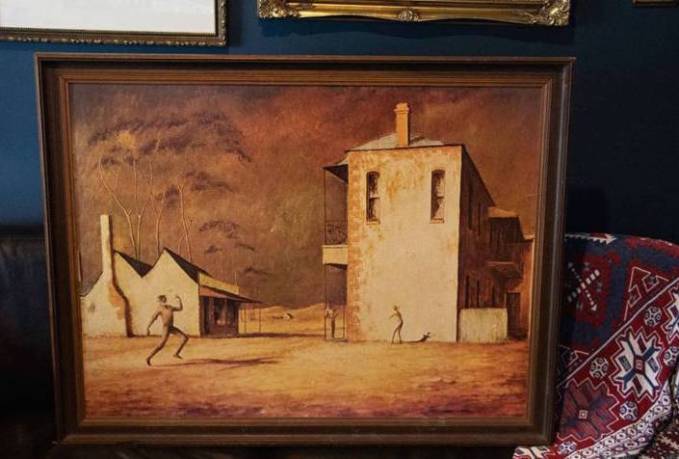
(Originally published in The Daily Telegraph. Painting: The Cricketers by Russell Drysdale)

Pay discrimination against women is issue of our time

When people talk about the innocence of childhood they aren’t usually referring to the gender pay gap.

But I’m going to draw that bow. It’s not as long as you think.

Because up until the end of school, the end of your childhood, the concept of potentially having a job that is worth more if you’re a bloke never crosses your mind.

I recall my graduation year at high school, a bog standard co-ed public on the South Coast, and the even balance among the students across all subjects. There was no marked difference.

Across the board boys and girls were either equally competent, equally brilliant or equally not made for school. My mate Anthony was dux in our graduation year, but another friend Katie was nipping at his heels. 

We had no concept either that among the teaching staff there was any difference in competence, ability or intelligence. Because there wasn’t.

It turns out, though, that school was some kind of egalitarian utopia. Because once you start earning a wage a very different picture emerges.

Talk to experts and they’ll tell you the slow diminution of women begins when they enter the workforce or tertiary education, and continues steadily through their working lives.

Inevitably more and more are put off certain vocations by the male culture that has developed in them.

For men it is the opposite, entry to a club where everything seems slightly easier than it should.

In today’s workforce you hear more and more about redressing the balance and of programs mentoring women in the office. The completely incorrect implication of that being that women somehow haven’t kept up, or can’t play the game, or just aren’t good enough.

How did we get to this point? Or more precisely, how have we always been at this point and why has more not changed?

Men know, from as far back as we can remember, that women are intellectually on a par with us. That our ‘female peers’ are exactly that, equals.

We know it from science and we know it intuitively. 

And yet the gender pay gap persists, as does the under-representation of women in company boardrooms and in politics.

There are only minor signs of improvement.

In this country the official wage gap has wound back only 0.6% from what it was in 1994.

And the Saturday Telegraph’s own investigation into the basic expectations of some employers shows just how transparent many industries are about paying women less than men.

Women, of course, are inevitably blamed for their own predicament. They’re allegedly not vocal enough, or cunning, or they are “too nice”.

It’s a bit like boys getting away with bad behaviour because they are boys. Men do too.

Men get away with being loud, overbearing or intractable because they are men, and it’s their nature.

The responsibility of women being paid fairly, equally, lies with the leadership of any organisation.

Offer anyone an advantage in the workplace and they’d be stupid not to take it, which is why responsible management is so vital. A management sensible enough to vanquish outdated practices and brave enough to see justice performed.

Part of it is appreciating the different attributes women and men bring to the workforce and rewarding them equally.

The subtle, but unrelenting, talking-over of women in the workplace, and the acceptance of it, will ultimately be to the detriment of our whole society.

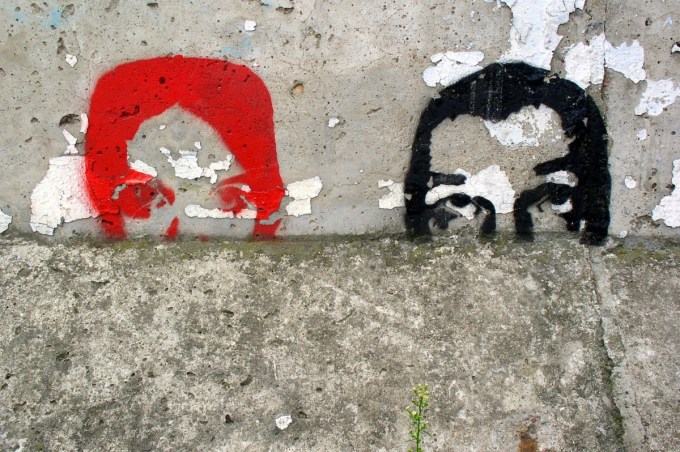
(Originally published in The Daily Telegraph. Illustration: Street art on Berlin Wall)

Flight Club: The underground drone racers of Sydney

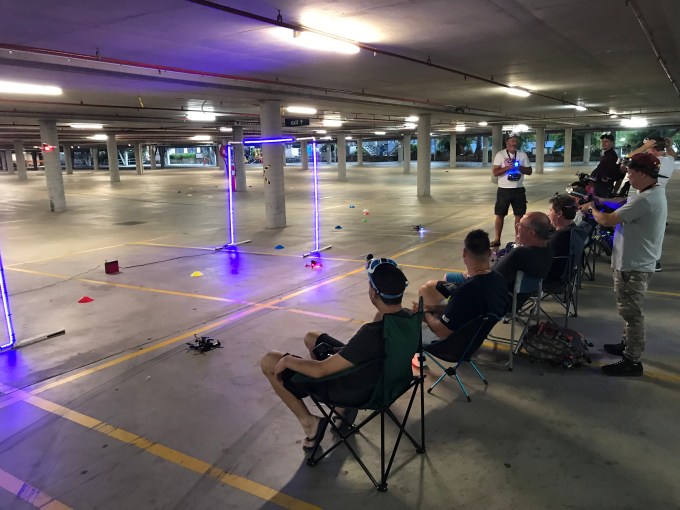
In a basement carpark in Sydney’s west, it’s getting on midnight and the air is filled with the squealing whirr of tiny rotors.

Under the low, strip-lit ceiling, coloured lights, red and blue, flash past at speeds of up to 80km/h.

The machines bank around the cement pillars, ducking and swooping, their engine revs maxing out as they hit a straight stretch and top speed.

A collection of more than a dozen enthusiasts, all men, from their early 20s to mid-50s, are sitting on fold-up chairs or tinkering with battery packs and GoPro cameras.

The racers, their faces partly obscured by virtual-reality goggles, stand in their midst, oblivious to everything going on around them, their focus on the first-person view in their headsets.

This is drone racing — an underground circuit mixing video gamers and model makers who meet in carparks, warehouses and abandoned buildings around Sydney.

They tee up meetings on social media and arrive at predesignated locations for sessions that last about five hours, with four racers competing against one another at a time.

“Underground racing is huge in Sydney and we’ve seen a lot more doing it in Melbourne,” says Jason Warring, a 41-year-old industrial designer from the Sutherland Shire.

His backpack is covered in small drones with five-inch propellers and silicon bumpers so they can safely skid across the concrete floor when they land or crash.

He builds them himself, spending between $400 and $700 on each, but you can build a good racing drone for as little as $200. A motor costs $20, a frame $30, camera $20-$60, and flight controller $60.

Live video from the drone feeds back to the goggles via an aerial, then to a transmitter before reaching the racer, for whom the action is like being in a video game.

“When you’re learning to fly in here it can be costly,” Warring says, indicating the overhead sprinklers and pylons. “Concrete’s not forgiving.

“It reminds me of skateboarding back in the ’80s and ’90s. But now I’m kinda old so I’m not jumping fences and that sort of thing now.

“Sometimes the police drive by but they usually leave us alone. We self-police and don’t bother anyone, so we’re not often moved on.”

Before a race the droners do a walkaround, pointing out any obstacles and laying down cones to mark the course.

“Once I saw one clip a sprinkler and set it off, but usually there’s not much to damage in places like this,” Warring says.

Phil Lea, 46, a production manager from Oatlands in Western Sydney, grew up building model aeroplanes and now constructs drones with his dad on the kitchen table. He also builds LED poles to make the gates that racers fly through.

“This is a bit of relief,” he says. “You get out of the hustle and bustle of life. It doesn’t affect anybody.

“It takes a while to get used to. The only thing letting us down is the batteries. The top guys last two to three minutes. I last four, five, six minutes but I’m not as hard on the throttle.”

Sam, a 28-year-old engineer with a medical devices firm, says: “These drones are built for speed so they’re more manoeuvrable and the classes are based on prop size.

“All the racing is happening on a five-inch class. The ones you see in the parks are a little larger, like the Phantom, which is seven inch.

“So they’re spinning slower, a slower motor, a larger prop. They’re getting like 15-20, maybe 30 minutes of airtime. We’re getting about two, three minutes tops.”

“We kinda soft police — we basically have plenty of rules around where we’re flying, where we land, where we take off from. We only put three to four in the air at a time.

“So some of the guys are spotting — watching what’s going on — and the other guys are racing.

“We do take a lot of care not to damage any property, and always spotting — letting people know if cars are coming or people walking by.”

NSW police are occasionally called out to public nuisance disturbances involving remote piloted aircraft but the responsibility for policing them remains with the Civil Aviation Safety Authority (CASA).

CASA authorises a number of associations, including the Model Aeronautical Association of Australia (MAAA) and the Australian Miniature Aerosports Society (AMAS), which organise official drone racing events.

Legislation requires drone operators to keep their machines within sight unless they have permission.

“This means being able to orientate, navigate and see the aircraft with your own eyes at all times, rather than through a device such as FPV (first-person view) goggles or on a video screen,” a CASA spokeswoman says.

The tight requirements are one reason unlicensed events have taken off.

Dave Purebred, the founder of FPVR drone racing, has hundreds of registered members who compete in official events around Australia for purses of up to $20,000. (The world’s richest drone race, Dubai’s World Drone Prix, offers a $250,000 first prize.)

Purebred says a lack of spaces in NSW is another reason for some drone racers bypassing official events to seek out what he calls “bando runs”, where abandoned buildings are used.

“All the states work together,” he says. “It’s just the accessibility to field and clubhouses that other states have. Brisbane has six temporary drone-safe flying fields to try it out. Victoria is also very open to the whole idea. They see the value of giving clubs allotments of land to do it safely.

“In Sydney, a combination of a few things, including archaic policy, has slowed it up from becoming a bigger sport. We can’t actually take off from council land here. But we can fly over it. It doesn’t make a lot of sense.”

NSW has four registered drone racing clubs, with events up and down the coast, in three classes (rookie, pilot and pro) held in open fields where drones fly through various hoops and around obstacles.

“In Sydney, we’ve got one of the largest clubs,” Purebred says. “There are hundreds of racers around NSW, as well as many more who don’t consider themselves up to spec yet.”

Kevin Dodd, the secretary of the MAAA, which has 10,000 members, says his association is working with CASA on education and safety. Dodd says many drone users don’t fully understand their liability for damage or infringing people’s privacy.

“Drone racing is growing at a massive speed,” he says. “It is a game changer, like digital cameras were when first introduced.

“It would be wonderful if more councils supported the sport or, over time, as drone racing becomes more established, we expect more and more councils will embrace it.

“It is a very popular sport with our youngsters. So from a community point of view, we expect councils will progressively embrace drones.”

Of the 18 racers assembled in the carpark, many are engineers and designers.

Jack Su, a 33-year-old IT expert, says: “The tech that’s behind it has opened it up. You’re a pilot inside the drone.

“I race at least once a week. You can build a drone for $200. But once you start getting serious you want to have a whole fleet of them.

“They all handle differently based on the frame geometry, just like in a race car where you have different weights and different body shapes that affect its aerodynamics and its performance parameters.

“A micro-drone weighs the same as a cheeseburger. We pick the right drone for the right track. It’s about more than just flying.”

(Originally published in The Daily Telegraph)

You cannot be Sirius?

Sydney sometimes seems like Los Angeles in the 1930s, a developer’s town, where politicians fete big business and nothing stands in the way of making money.

Take the sell-off of social housing in Millers Point, Dawes Point and The Rocks. These are areas in our past associated with the city’s tenements and working class, but today are sought after spaces for millionaires’ homes, hotels and apartments snapped up by rich foreign investors.

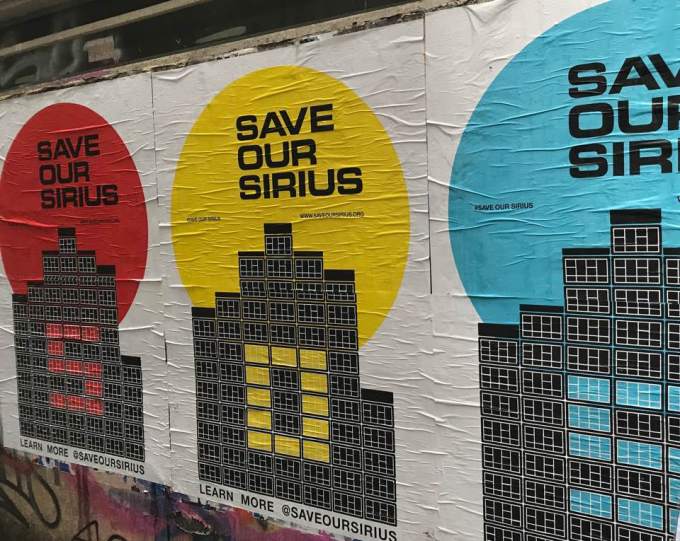
The Sirius building was once a historic housing project that both represented a utopian vision for the poor and also – sitting next to the Coathanger with the best views in town – of the inclusivity of Sydneysiders to all walks of life. This week it too went on the sale block.

Pru Goward, the minister for families, gushed at the “incredible views” from one of the flats as the last resident, blind 91-year-old Myra Demetriou, was given her marching orders.

Whether it was the views or just dollar signs that filled Goward’s vision is unclear. The NSW government wants $100 million for Sirius, which will pay for more social housing on the outskirts of Sydney.

In Millers Point, the poor have been moved out of 90 homes, mostly terrace houses, sold for $252 million. It’s claimed it will fund 1500 new social housing flats in Penrith, Jannali, Campbelltown, Northmead and a number of other areas away from the coveted views and lifestyle of Sydney’s harbour suburbs.

And I know there are plenty of people who think that’s fair enough. A better allocation of resources.

And why should the poor get a water view when anyone else has to be a multi-millionaire? Right?

Except for that nagging moral belief in an inclusive society. After all, we still like to see ourselves as the caring ‘fair go’ country. Don’t we?

The government spin is it’s ‘ending the days of concentrating disadvantage’, but what it’s actually doing is creating rich enclaves where no one ever has to be bothered by someone down on their luck.

It is often through familiarity that we understand other people, other ways of life and of thinking. Remove that and you’re living in a bubble.

It’s a fake argument to say demolishing and selling off a building like Sirius is justified to build more social housing flats. You can apply that argument to practically anywhere (Sell off the prime Macquarie Street real estate of Parliament House and move it to Campbelltown).

The Sirius building represents more than the disappearing architectural heritage of this city. It was originally built to rehouse displaced residents of The Rocks as the area was redeveloped.

This week Goward held out the faint hope that Sirius (in structure at least) might remain, by giving developers the option to either renovate the existing building (like the Barbican or Isokon in London) or knock it down and build a lower structure beneath the deck of the Harbour Bridge.

The reality is the Modernist block, which has a Vegemite-like love it or hate it quality, will be razed by any buyer and replaced with featureless contemporary glass and steel apartments with multi-million-dollar price tags.

But the real tragedy of the Sirius is that even in the not too-distant late 1970s, when it was constructed, Sydney was still a city that valued the place of all people – rich, poor and in-between.

Not any more.

(Originally published in The Daily Telegraph)
Awkward talks with your children – Part 71: Sexting

I first had the conversation with my daughter when she was nine.

To her it was “excruciatingly awkward” (her own words to my wife and I) and “unnecessary” (she insisted).

We weren’t talking about the birds and the bees, it was about revenge porn and sexting — nude photos sent by mobile phone.

It went along the lines of: “Don’t ever, ever, ever send a picture of yourself undressed to anyone.”

Friends I mentioned it to thought I was overreacting.

It’s the type of topic no Enid Blyton book can prepare a parent for talking about with their offspring.

I didn’t, by the way, think this was something my daughter had encountered.

At the time she didn’t even have a mobile phone. But many of her friends did (some since the age of six).

While sharing sexts is a problem, the fact is you don’t even need to own a mobile to end up a victim of sexting.

There was a time when someone standing around a change room with a camera would set off alarm bells, but today everyone accepts camera phones in any situation.

Pictures shared knowingly or taken innocently, or as a joke, can have devastating, long-term implications.

Moreover, the pressure to sexualise childhood interactions starts young.

More than a third of teens aged 13 to 15 have sent a sexual image, while over 60 per cent have received one.

Primary schools now bring in the police to explain cyber bullying and sexting.

While everyone wants their kids to have an idyllic childhood and not have to need to talk about this stuff, the times are such that we do.

Children have to be warned, and warned early, not just that they can be bullied and victimised in this way, but that through immaturity they can find themselves in the role of perpetrator.

Sharing sexts can also leave the sender open to criminal prosecution for disseminating child pornography and a place on the sex offenders’ ­register.

Pornography has been around for centuries, but was never ubiquitous in the mainstream way it, arguably, is now.

It ranges from the pornification of modelling that brands like Victoria’s Secret have led, to TV shows like Geordie Shore portraying relationships as a careless merry-go-round of beds and partners.

For anyone of an impressionable age, viewing relationships in this way or through the prism of pornography sends a bunch of harmful messages.

At an age where important relationships are being formed with friends, family and at some point love interests, trust is a fragile but vital commodity.

Building those relationships in the right way fortifies us against the inevitable let-downs of life. Why else as people grow older are they prone to well-up over random recollections of a parent’s kindness or faithfully sentimentalise a first love?

Trust. It’s hard won and painfully lost.

Schools can educate, but are not ultimately responsible for getting through to boys and girls to respect the rights and feelings of others, and to guard against the easy exploitation that comes with the digital age.

So teach your children well, and don’t shy away from the occasional cringingly awkward conversation that may head off something worse.

(Originally published in The Daily Telegraph.  Illustration by Nicholas Robertson)

Try a little empathy. Four women judged in death

‘It was a sliding doors moment,” Bree Keller’s mum Tania said.

The moment her daughter chose to get into a high-powered sports car with men she may only have met a short time before.

Looking at the multitude of Instagram pics of the young model plastered over the news it’s easy to forget that for four days she remained the unidentified victim of a fiery crash in Sydney’s CBD.

It didn’t take long for the other passengers, all men, to be ID’d. It was one of their cars. They were all mates.

When you’ve registered a car, or paid for a hotel room, you leave a trail and you’re easy to find.

Like the mates at the bucks party who had no idea who the woman they took back to their hotel was, then found her dead the next morning in their shower.

The cause of death is yet to be determined.

The recent deaths of Bree and of Natasha Rowley, who police took 11 days to identify, show that the cost of youthful adventurousness, of taking a chance and foregoing your normal ­secure arrangements can be high.

And while they were adults and they made their own choices, society has a funny attitude to women prepared to take even minor risks.

In stepping outside the bounds of what’s seen as prudent judgment it’s as though they forfeit the same concern we afford to those who stick to the rule book.

So somehow to the public Natasha’s death during a bucks night had to be the result of her own recklessness.

Why else was she there? A 20-year-old with a bunch of much older blokes?

There was concern ­expressed for the “awkward” situation the groom had been placed in, having to explain to his bride why they had brought a young woman home with them.

And Bree getting in the back seat of a Japanese muscle car with men driving too fast, well … you could ­almost hear the empathy seeping away.

As her body lay unidentified for much of the week, she seemed to be a footnote to the central drama of fast cars and furious driving.

It was reminiscent, too, of the death last December of Stacey Tierney in Melbourne, the 29-year-old Briton found one cold morning in a room at a strip club. The “gentlemen” she was entertaining having long gone home to their families.

She died a lonely death in a place far from home.

Like Bree she had been described as a “free spirit”, someone not afraid to take life by the collar and shake it.

Whether they were too impulsive I don’t know, but the care that was lacking in the last moments of their lives should not be echoed in how we, as a community, view them.

That community, of friends and strangers alike, should always be one that is protective, especially towards those who find themselves suddenly in a moment of life-threatening ­vulnerability. It is what philosophers call the social contract.

There is a picture by the famous Mexican photographer Agustin ­Casasola of the body of a young American woman called Hazel Walker, who was shot dead in a hotel room in the wild city of Juarez, Mexico.

Little is recorded of her death, but her companion skipped town shortly afterwards, leaving her corpse abandoned on a slab in the Juarez Hospital mortuary for an inquest to speculate if she had killed herself or been murdered.

The fact no one cared enough to ever determine this speaks volumes. She was out of her depth and mixing with the wrong crowd.

That was around 1922 — 95 years later, not much is different.

(Originally published in The Daily Telegraph. Photo of Bree Keller)

No Australian should stand for inequality

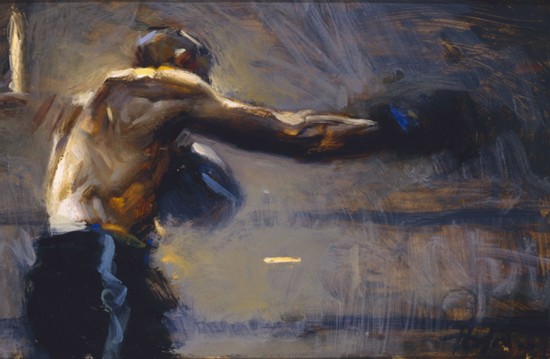
Trash talk precedes most big fights. Boxers have to sell seats and the more bums on them the better their payday.

Anthony Mundine’s no stranger to that. He’s been stirring the pot his whole career, drumming up business, psyching out his opponents, giving the public the loud mouth anti-hero some genuinely hate, while others look beyond the words to the fighter, the athlete.

Unlike most scrappers, though, Mundine has rarely wasted these opportunities (which are fewer and further between for him) by talking up simple rivalries.

Five years ago he caused controversy by disputing fellow boxer Daniel Geale’s very Aboriginality.

There has never been anything mundane about Mundine.

Instead he’s used that time as a platform to push debate around indigenous life and to hopefully change it for the better.

He has vowed to sit down during the playing of the national anthem at his rematch with Danny Green on Friday night, calling it “disrespectful” to his people.

And as an Australian, let alone an Aboriginal one, he has every right to do that.

If, as is mooted, promoters get around this by having the anthem played before he enters the ring it would be another stain on this country’s already tarnished history of race relations.

It would be a greater disgrace than what some perceive is Mundine’s snub to Advance Australia Fair.

Mundine should absolutely be allowed to get in that ring and sit on his seat while the anthem is sung. As the headlining boxer he deserves to have that moment – to be more than a piece of meat, making a small fortune for the promoters.

He deserves to be able to rankle the masses and let them know where he stands as an individual, and maybe make them think a bit longer about what it really means to be Australian – both white and black.

Our headlining Aboriginal sportsmen are the ones who get the most column inches when they speak on these issues, even though they are shouted down.

Adam Goodes, one of the most eloquent sports people when talking about racism and the toll of white Australia on native Australians, has paid the price. Derided, bullied, beaten down.

The fact of the matter is there has never been a level playing field for Aboriginals and Torres Strait Islanders in Australia, and we have a long way to go before we get one.

It is not, as Barnaby Joyce insists, about having to say ‘sorry’ for ancestors like his who came to the country as immigrants and had nothing to do with colonial massacres.

It’s simply about recognising things are not fair and working towards making them so.

It’s kinda in the title: Advance Australia Fair.

Only the anthem doesn’t mean ‘fair go’ it means things being nice, good, palatable.

Well it’s not ‘nice’ that indigenous Australians live on average 17 years less than non-indigenous. Nor is it ‘good’ that Aboriginal women are 58 times more likely to be held in police custody than white women. It’s not ‘palatable’ that suicide rates among the indigenous population are three times higher than for everyone else. It’s certainly not ‘fair’.

That’s not the fairness Australia is meant to be about. It’s meant to be about equality.

Equality for blacks and whites, for Asians, for women, for gays and anyone else born with the same irrefutable rights as the next person.

Mundine will continue taking the hits and speaking his mind. And I hope for all Australians, come Friday, that he is allowed to sit on his stool as the anthem rings out and make his point.

That would really advance Australia fair.

Lessons in the cost of silence

It seems wrong that the survivors of the Holocaust are generally only bracketed in the category of victims, and all that that implies. Helplessness, weakness.

Because in truth they are anything but that.

The survivor’s of one of the world’s worst ever acts of genocide have a strength that is difficult to put into words.

And the lessons they teach, cautioning against intolerance, have eclipsed the toxic legacy of Adolf Hitler and the Nazis.

Today their role in educating us about the environment that gave rise to the Holocaust and how governments can manipulate people against one another, is as important as ever.

Their input in teaching critical thinking is a rare boon for us here in Australia, but one with a finite window.

Now aged from their late 70s to 90s, when you meet these remarkable men and women you can’t help notice the twinkle in their eyes. The horrors they have witnessed have not suppressed their inner spirit.

To hear their accounts of survival under Hitler’s regime is much more powerful than to read it in a history book.

We all know the grim statistics. The six million Jews murdered in World War II, as well as the gypsies, Serbs and other persecuted minorities.

But for many Australians the reality of this seems very distant, an event that occurred, now, a long time ago, far away in Europe.

We would all like to think that we would not have stood by and let what was done to the Jews happen.

It’s unfathomable to us how so many could have turned a blind eye, while others were active in the persecution and many more showed little to no compassion for their countrymen.

Historians often cite British prime minister Neville Chamberlain’s disastrous appeasement of Hitler, but he was not alone. Appeasers, cowed into silence, in fear of conflict or punishment, were everywhere, at all levels.

And yet, Germany and other countries under the Nazi yoke, were highly educated, cultured places.

The way in which populations were manipulated over time – through propaganda and fear-mongering – to turn on the Jews remains an important and relevant historical lesson.

If it happened then, it could happen now. We are not that different from our forebears of the 1930s.

Speaking up, speaking out, both for ourselves and others, is not always easy.

Here on the streets of Sydney would you say something if you heard abuse yelled at a woman in a head scarf or two men holding hands.

Remind yourself of the cost of silence and, too, that one voice can inspire the courage in others to also speak out.

The Jews that survived the Holocaust, men and women such as Jack Meister, Yvonne Engelman, Olga Horak and Paul Drexler, have a white-knuckle story to tell, but also a powerful lesson in humanity and how quickly it can unravel.

If you have a bucket list of things you want to do in life, add something really meaningful to it and go down to the Sydney Jewish Museum in Darlinghurst Road and speak to a survivor. I tell you, it will blow your mind.

Listen to Olga explain how an act was passed overnight in her home country, the Slovak Republic, and authorities came the next day and took her 16-year-old sister from the family home. Hearing her say “we never saw her again, they sent her to Auschwitz,” will make your blood run cold.

Her account of life under the Nazis and their collaborators should be compulsory reading for all Australian school students. From her time at Bergen-Belsen (where Anne Frank died) and a meeting with ‘Angel of Death’ Dr Josef Mengele, to witnessing the devastation of the British firebombing of Dresden, Olga’s story is a rich microcosm of some of the key events of WWII.

And, though memories of that conflict recede in time, we should not waste the opportunity to learn from these incredible Australians in our midst.

They are people who lost almost everything, but rebuilt their lives here and, to this day, continue to contribute greatly to the community.

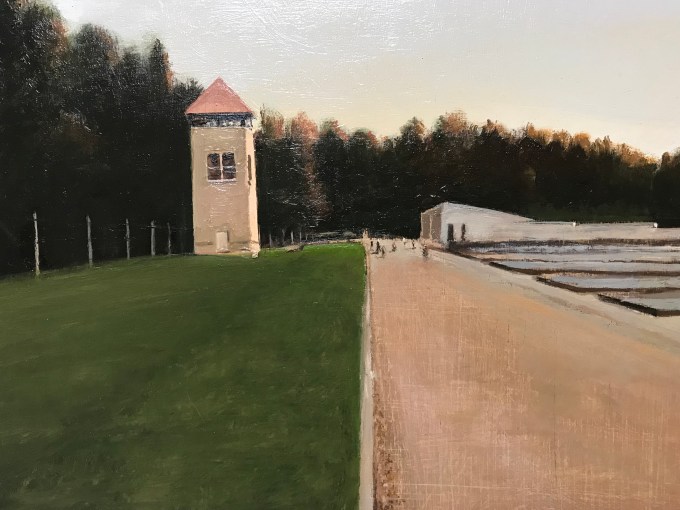
(Originally published in The Daily Telegraph. Painting: Dachau Memorial by Ivan Goodacre.)