Cricket’s ‘deadly’ consequences underplayed and underreported

I was fielding at square leg when the ball flew high over my head, struck from the western end of the pitch at St Andrew’s College in a hurried arc. It took about four seconds to reach my father.

All of 71, he was sitting on a bench talking with my daughter, their eyes averted from the game, and I had already started sprinting towards them, yelling at the same moment the leather projectile zeroed in on him, gashing open his head and sending him sprawling to the ground.

Only later in casualty, as a medic looped seven stitches in his bloodied forehead, did the catastrophising kick in. What if the ball had struck him in the temple? Or hit my child?

Having set up the match myself, I felt a sick pit of culpability in my stomach, like John Irving’s titular hero Owen Meany. The consequences didn’t bear thinking about.

We assume death and serious injury in cricket is freakish and far apart. But that incident seven years ago had me reconsidering, and recent studies have found evidence of a larger, more serious problem than our schoolboy view of the game had previously allowed.

Now, a new book that examines and explains cricket history using different data sources has drawn some unsettling conclusions, raising concerns of the probable significant under-reporting of concussion incidents here in Australia, and that this occurs at a higher rate than elsewhere in the world.

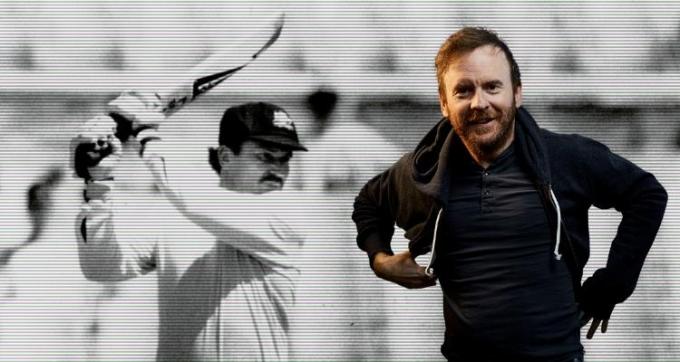
A wide-ranging book, Crickonomics by Stefan Szymanski (pictured above) and Tim Wigmore, answers numerous tantalising questions about Australia’s premier summer sport. If you have wondered whether batters or bowlers are more valuable, why the private school system continues to feed the upper echelons of the game or how women’s cricket has innovated the sport, you are in luck.

But it is the book’s estimate of concussion rates in Australia that makes for the most fascinating reading.

Szymanski, an economics professor at the University of Michigan’s School of Kinesiology, has written a number of books on sport using statistical analysis, including three on soccer.

But the Nigerian-born, UK-raised son of a Polish dad and English mum is just as hooked on cricket and has a netted pitch and ball machine in his backyard (his son Ed, he tells me, is the owner of the fittingly titled Lords restaurant in New York).

“I think there’s always been a resistance to the idea that data can tell us anything,” Szymanski says of Crickonomics, over an early morning (for me) Zoom call. “And there’s a belief that there’s something in the game, which you’re missing out on if you try to put it into numbers, and there’s a spirit of the game and a soul of the game.”

But keeping better data, both writers contend, is where cricket can save lives and prevent injuries.

“The experience of Australia suggests that concussions have been systematically underreported,” Szymanski and Wigmore say.

A cricket ball weighs 163 grams and, with a cork core wrapped in string and sealed with leather, is one of the hardest balls in sport.

Nobody wants to be hit by a cricket ball. A batter, even with the advantage of pads, gloves and a box, still does whatever they can to not be hit by that ball, which has a deep impact regardless of pace – and at true pace can be terrifying.

The death of Phillip Hughes in 2014 from a bouncer that tore the artery below his left ear was one of the few well-publicised incidents to bring the dangers of cricket balls sharply into focus. Before this in Australia, you had to go back to 1975 and the death of 22-year-old Martin Bedkober, a talented Adam Gilchrist-esque keeper/batsman on the verge of state selection, who died after being hit “over the heart” by a ball.

In the decade up to 2014, one concussion a season was reported in Australian cricket. After Hughes’ death, Cricket Australia commissioned La Trobe University to research concussions. It found evidence of 92 head impacts in men’s matches between 2015 and 2017, of which 29 were concussions. Records going back to 1850 revealed 544 cricket-related deaths in Australia, New Zealand, Great Britain and Ireland.

Using data from La Trobe’s 2018 study, and its estimate of a head impact every 2000 balls and concussion every 9000 balls, Szymanski compared it with the number of balls bowled (1,012,160) during the 2019 first class men’s cricket season in Australia. He extrapolated a result of 160 head impacts and 37 concussions for that one season – almost four times current estimates.

According to Szymanski, that puts the rate of head impacts in the Australian domestic game two-thirds higher than the known rate in other cricket-playing countries.

“There are a number of reasons for this,” he says. “Pace bowlers in Australia tend to be faster, spinners deliver a lower share of overs, and the pitches tend to be quicker.”

He laments the lack of data kept on cricket, when compared with sports such as baseball.

“We’ve got [cricket] scorecards from before 1750,” he tells me. “Yeah, well, that’s not enough detail. What you need is a record of every stroke played, every ball delivered. That’s how you can do real performance analysis.

“There are about 200,000 events in a baseball season. And I can get 100 years of baseball seasons. Now, once you’ve got that data, I can do statistical analysis with it and start to identify different things.”

Innovations such as helmets have made a difference, the book says, and there have been just 10 recorded deaths among cricketers in Australia after the introduction of helmets, compared with nine in the previous decade – the 1970s.

But Szymanski says that, despite a decline in deaths, scientific evidence shows the danger of head injuries is greater than previously assumed, and growing.

“There are myriad theories for the increase in head impacts and concussions,” he writes. “Batting technique against short bowling is said to have deteriorated (caused by an over-reliance on helmets) … Limited-overs formats are blamed for encouraging batters to hook the ball more compulsively … Improved strength and conditioning has enabled players to bowl up around 90mph (144km/h) now more frequently than before. And there is simply more cricket played now.”

In March, Cricket Victoria and Cricket Australia cleared Australian batsman Will Pucovski to continue playing despite him having reportedly suffered 11 concussions, the most recent during a Sheffield Shield match in February. According to the two governing bodies, a panel of experts – including neurologists – believed some of Pucovski’s concussions had been misdiagnosed and were actually stress-related responses.

But despite the recent spotlight on concussion, the accumulation of data on the topic has still been piecemeal, and what information is available has often focused on injuries to batters and not other associated incidents.

Additionally, it is becoming clearer that both authorities and the media, over a long period of time, have failed to appreciate the pattern of repeated incidents and to report on them as such. This has contributed to a general nonchalance among players and the public concerning risks.

Cricket statistician Charles Davis found in a search of Trove in 2015 more than 90 separate cases of men, women and children killed by cricket balls from 1880 to the 1950s in Australia. They included players (most of them batsmen), umpires and spectators. Of these deaths, 33 were aged under 16. The youngest, a baby of 11 months, Annie Dennison, was struck by a ball in a backyard game in 1894.

Davis wrote: “Most of these events attracted only fleeting attention, with just a few lines of reportage and no follow-up. In the few reports where any implications were discussed, no one seemed aware of more than a handful of prior cases.

“It was certainly a surprise to find how many times this happened, and how young the victims often were.”

Unlike many statistical compilations, Davis’ work did not include heart attacks during games, which have also contributed to many deaths, but are no different to exercise-induced heart attacks in any sport. (Of this, I can also attest having had a teammate, friend and colleague – Bob Spivey, 56 – die batting in a match in Devon while captaining the Daily Mirror/Sun team the Badgers in 2005. Fare thee well, Bob.)

Szymanski concludes a better record of the game will ultimately reduce the chance of injury or death.

“I think the statistical era of cricket is in some ways beginning now, and will actually develop quite rapidly in the coming decades,” he says.

“Something I’ve always felt very strongly as an economist is you have to understand history, and you have to understand culture and how they interplay with one another … to go back and reconstruct from what data we’ve got, the historical record, in order to get a better picture.”

This story was originally published in The Australian Financial Review newspaper on November 12, 2022.

On having women heroes: Alex Blackwell

Alex Blackwell’s brow furrows. The heavily pregnant (her baby is due in five weeks when we meet) TV commentator and former Australian women’s cricket captain has just heard her friend Beth Mooney has had her jaw broken. On the eve of the Ashes series, the loss of Australia’s best batter is bad news, but it’s more Mooney’s immediate health that is bothering Blackwell.

“She needs surgery,” she informs me, checking a stream of phone messages from friends and contacts. I ask how it happened.

“Motty [coach Matthew Mott] was throwing to her [not bowling, but chucking down deliveries in the practice nets],” she responds matter-of-factly. “Apparently, it came up under the grill [face protector]. She was a big support to me in that 2017 tour and an avid reader… I’ll send her an advance copy of the book.”

The book in question is Blackwell’s memoir, Fair Game, which is published this month. I commiserate dutifully and motion to the waitress for a menu, as Blackwell texts a salvo of replies. (Mooney returned to the crease just nine days after having surgery on her jaw.)

We’ve met at Lavana on Sydney Harbour. It is a place neither of us has dined at before but, because of COVID-19 infection numbers (29,833 cases the day of our assignation), it is the product of a search for an à la carte restaurant with open-air seating – not that simple a prospect for lunch on a Tuesday. There’s a light rain that comes and goes and the sky’s a comforting shade of grey, as we relax into the woven-backed Parisian bistro-type chairs.

Between its awnings and folded away front and side windows, Lavana is breezy and fresh, and the old wharves of Walsh Bay and their expensive pads float on the sea before us.

After conferring over the menu, we decide on Pelmeni (Russian-style chicken dumplings) and seared scallops as a starter to share. I tell Blackwell “no judging” on the matter of drinks, but she pats her stomach and orders mineral water anyway. Showing zero solidarity, I choose a glass of Cesari Pinot Grigio Delle Venezie, a crisp, dry and light Italian, with a slight grapefruit finish.

We’re seeing young boys looking up to the girls. They’re attending these matches, they don’t see gender.

“I’m looking forward to getting active again,” she tells me. “I’m having difficulty walking and feel uncomfortable in my body. I used to be an elite athlete and recognise how fit I was now that I’m not.

“I’m starting to think I’m two people, not one, and my mum is thrilled I’m not on the road [cycling to work] any more.”

Blackwell retired from international cricket four years ago and now commentates on TV. She also consults as a list manager for the Sydney Thunder – the Women’s Big Bash League team she led until 2019 and which she left owning the record for most runs and games across both the women’s and men’s competition.

A right-handed specialist bat and sometime medium pace bowler, she plundered 14 titles with the NSW Breakers, averaging over 47 with them. She held the record for most international appearances by an Australian woman player (251) until Ellyse Perry passed her in October. And, was the first woman to be elected a director to the board of Cricket NSW.

The 38-year-old’s next accomplishment will debut a month before that of Blackwell’s identical twin, Kate, who is pregnant too, with her first baby. She tells me the sisters, who both represented Australia in cricket and now share an obstetrician, are not that alike – but I’m having a hard time buying it. They are set to join a burgeoning baby club of Australian international cricketers becoming mums, including the current vice-captain, Rachael Haynes.

Blackwell has watched the game explode as better marketing and more cash has increased its visibility and appeal.

“We’re seeing young boys looking up to the girls,” she says. “They’re attending these matches, they don’t see gender and they’re getting photos with legends. There are young boys now modelling their game on the likes of Meg Lanning.”

Blackwell is on maternity leave from NSW Health, where she works part-time as a genetic counsellor, while juggling other commitments. It’s timely not just for the baby but also the publicity drive for the book.

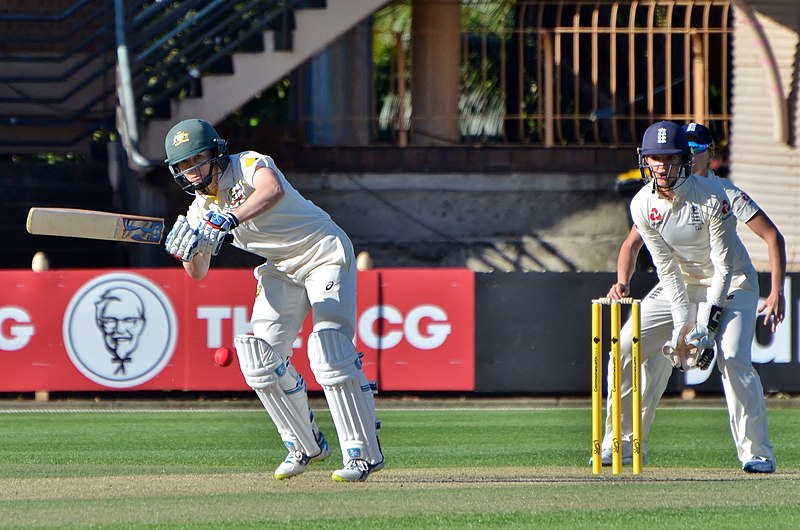
Alex Blackwell playing in a 2010 Ashes Test against England. Photo: Bahnfrend/Wikimedia Commons.

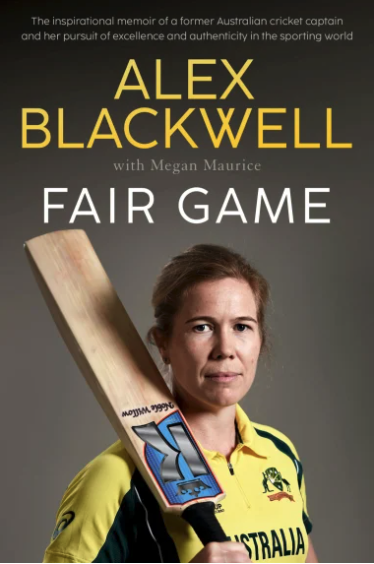
Fair Game, written with journalist Megan Maurice and published by Hachette, recounts her early life, her rise up the ranks of female cricketers, and the triumphs and disappointments she faced as a player and a lesbian, in a time when people in the LGBTQI community had little support. The book’s title says it all and although, for Blackwell, it draws a line under many things, it is going to put a few noses out of joint.

“The views expressed in the book will not come as a shock. I think it’s important to speak directly to people about your issues… and I’ve done that,” she says bluntly. “We should be scrutinising what goes on in our national team.”

And what does go on in the national team she hasn’t always been happy with, slating simplistic tactics, a stifling of creativity and the patronising of female players by Cricket Australia and some of its coaches.

During her playing career, she was often at odds with coaches’ strategies and has some firm thoughts on the current set-up.

“I see fewer genuine batters coming through and I’m fascinated with the leg-spin bowling selection,” she says. “Alana King is great, but I wonder why we don’t have a ripping legspinner in that team. We want to encourage our spinners to turn the ball. I think Wello (Amanda-Jade Wellington) is just a bit of a different cat. I think we should encourage them to explore all their talent.

“It’s a bit robotic to pick people that only attack the stumps. It’s like, ‘We’ve cracked the code and there’s only one way’.”

My heroes were not women originally because they were not on television.

Despite this, she sees Australia winning the multi-format Ashes, but predicts a close series. (Correct, as it turned out, with the Ashes retained last night in the first ODI).

Blackwell was born in the NSW Riverina town of Wagga Wagga, 10 minutes before Kate, and grew up on a farm in the town of Yenda with her two older sisters, Leigh and Jane, and supportive parents who, she says, “wanted a rich life for their daughters”.

It was with Kate she first learnt to play the game on their grandparents’ wheat and rice farm near Tharbogang, just outside Griffith, using an old tree stump as a wicket.

“The champions of women’s sport and women and girls in sport tended to be males out in the country for Kate and I,” says Blackwell. She honed her craft on the concrete pitches of the Griffith Exies Club, across the road from her school. It was there that a teacher, noting their talent, set up the first female cricket team at the school. Within the year it had won the state knockout and Alex and Kate came to the attention of Australian cricket captain Belinda Clark, the country’s most decorated exponent of the game.

From that point on, Blackwell had the sport in her blood. While studying medicine at UNSW, she made her debut for Australia at the age of 19. Kate followed a year later, the pair being compared to the Waugh twins, Steve and Mark, who in 1991 had become the first twins to play test cricket for Australia.

“My heroes were not women originally because they were not on television,” she says. “It was only when I received a poster of Belinda Clark that I realised women played.”

“It irritates me when I hear, ‘Oh, how good’s the women’s game now, how quickly is it improving.’ The men’s and women’s games have always been improving and I feel it’s disrespectful to the legends of the game that came just before TV [picked it up].”

It is not the only criticism Blackwell has for how women’s cricket has been treated or of cricket’s authorities. Fair Game details her disappointment at being shut out of full-time Australian captaincy and the initial lack of encouragement for acknowledging LGBTQI players. But the experience, she says, taught her a lot.

“One of the lessons I’ve learnt is you aren’t always going to be number one choice for a role and that’s OK,” she says. “You can do a very good job in 2ic [second in command]. That’s the position I found myself in a lot.

“I do feel the attributes that made me good as a vice captain were held against me to be the actual captain… People can be pigeonholed in that deputy role and I felt a little bit that nice guys finish second.

“You have to put yourself forward for these positions and I didn’t put myself forward fully when I really had a great opportunity to be the number one leader in the team. If you do want to step up you need to demonstrate that.”

But Blackwell also acknowledges a tightrope walk for ambitious women, adding: “Women leaders need a lot of likeability to make it to the top.

“What I’ve learnt around leadership is it takes time to embrace different views, but if you don’t, then you run the risk of missing things. If I was the leader or coach of the best players in Australia I would want them to have more ownership of the direction.

“It felt at times under coaches from the men’s set-up coming into the women’s set-up that there wasn’t enough trust and respect that those players know their game and should be directed.

“I thought that hurt us in the end. Because I feel people rise or fall to the expectations you put on them and if you’re only going to plan for one thing you’re never able to get out of trouble if that’s not working.”

Professionalism in domestic women’s cricket has had an obvious impact on the game and, with better production and marketing, made stars of the current crop of cricketers. But the pioneers behind that change can be found in only low-res video on YouTube.

“Women being able to play longer has allowed the game to improve,” says Blackwell.

Although parity for female players has improved, there’s much work to be done. Blackwell herself made enough to play as a professional for only six months of her career. She and her wife, former England player Lynsey Askew, now a personal trainer, live in a nice two-bedroom apartment in Ashfield, but it’s a far cry from the likes of David Warner Inc and his collection of multimillion-dollar residences.

Blackwell struggled from a young age with, what she calls, her own internalised homophobia that “chipped away” at her. She recounts being told pointedly by a Cricket Australia official that the organisation was promoting the game as “a place mothers wanted to bring their daughters to play” and not to talk about being gay.

There’s still some moments where that internalised homophobia rears its head. It’s a response to growing up in Australia and growing up in cricket.

Despite these slights, in 2013 Blackwell became the first woman international cricketer to publicly come out as lesbian.

“Growing up in a society that has those subliminal messages was hard, and it’s still not always easy for me,” she says. “People will look at me and think, ‘Oh, she’s out there and proud.’ But there’s still some moments where that internalised homophobia rears its head. It’s a response to growing up in Australia and growing up in cricket.

“I’m OK with the person I’ve become and I like who I am, and it was difficult to feel my sport didn’t want me.”

The book is full of Blackwell’s clashes over prevailing attitudes. But, pragmatically, she rarely allows herself to respond emotionally, instead resetting when ruffled and presenting a calm, rational argument. What Blackwell hardly ever does, however, is leave things unsaid.

“I’m a little bit fatigued by that actually,” she says, as our mains arrive: pan-fried barramundi for her, duck a l’orange with baby carrots pour moi.

I put it to her that she might be “a bit mouthy”. She pauses, then laughs, seemingly in agreement. The truth is Blackwell is not a confrontational person, but determinedly finds ways to get her point across on her own terms.

“I think I’m always someone who’s looking at how can we be better, how can I be better and that puts pressure on other people,” she says.

With Askew, her partner of 13 years, she is now contemplating a whole new phase of life. But interestingly, that life remains closely entwined with Kate.

“We’re not in the same hospital,” she tells me, struggling to illustrate they’re not as in sync as it appears. “It’s a totally new phase of my life now. I’m so excited about it.

“[Kate’s] due a month after me. Isn’t it ridiculous? It’s just silly. We’re both 38, so we’ve got to get on with it. We’re really not that twinny, we’re not that twinny at all.

“We’re a little different with our [hospital] preferences, but we are seeing the same obstetrician. I told him, ‘You’re going to get us mixed up, we’re both in same-sex relationships, one month apart.’

“It’s going to be good going through this new challenge together. We’ve always lived our own lives but as it’s turned out, we’ve had similar interests. I’ve been very lucky to have her. She’s almost been like a psychologist to me.”

Blackwell is part of a baby boom recently among Australia’s female cricketers. Haynes and partner Leah Poulton had a son in October. Fast-bowler Megan Schutt’s partner, Jess Holyoake, had a daughter in August. And last month, former international and current Australia A player Erin Burns’ partner, Anna Jane, gave birth to a boy.

That’s been very powerful. To have a position where I can influence and I can speak up – so I’ve done that and don’t hold back any more.

Will there be a baby club?

“Probably,” says Blackwell. “Rachael and Leah are very good friends and live not that far from us.”

It’s a long way from the days when gay players trod awards night red carpet events alone, afraid they could lose their place in a team or even their job if they were “out”.

“It was a big deal for me to actually say, ‘my partner’ for the first time,” says Blackwell. “I accidentally found myself in this position – rocking the boat. These days through the medium of social media there is no coming out any more. You just put up a picture of yourself out to dinner or getting engaged and it’s just out there. I think that’s great. It’s just not such a big deal any more.”

But what she went through, and more so, what past players went through, is a source of anger for Blackwell. She believes an official apology is due to players intimidated into hiding their sexuality.

“I have connected quite a lot with past players, just randomly, who come up to me and say, ‘Thanks for saying what we couldn’t.’ And that’s been very powerful,” she says. “To have a position where I can influence and I can speak up – so I’ve done that and don’t hold back any more.

”I feel like the invisible legends have paved the way and given so much against the tide. I can’t speak for them, but my perspective on what they’ve done is huge and they didn’t get to enjoy the freedoms the current players do. I feel sad about that.”

As we finish off the meal with apple crumble and lava cake with ice cream, splitting them down the middle to share, it’s only the future Blackwell has her eyes on.

And she gives a big steer to the gender of her baby in the book’s last chapter (you’ll have to buy it).

“I’ll definitely take our child to the nets someday and see what they think,” she says, “we will bring a lot of love to that child.”

First published in The Australian Financial Review on February 4, 2022.

Image of Alex Blackwell by Bahnfrend Wikimedia Commons.

Adam Zwar’s Twelve Summers of cricket nostalgia

Sunburnt bodies on The Hill, advertising jingles turned national anthem, the crump of a bouncer dug into the pitch with merciless intent and a minted commentary dramatising each sublime moment. Welcome to a summer gone by in Australia, where the wallpaper of Test match cricket was welded to terrestrial TV, gold chains hung in the chest hair of macho fast bowlers and it was mostly young boys who dreamt of some day playing the game for their country.

Now, edging 2022, the women’s team is arguably more successful than the men’s, competitions are fragmented across different streaming platforms and energy firms – rather than beer and cigarette companies – crowd the hoardings.

While scandal is never far from play (Sandpapergate, Tim Paine) the world has evolved beyond the game, professionalising, bowdlerising it.

Author and actor Adam Zwar has wanted to write a book on Australian cricket since he was 16. That was about four years after accepting his destiny was to be on cricket’s sidelines. Now 49, he is contemplating what psychological import it had on him as a boy and beyond. The backdrop of Twelve Summers stretches from 1980 to 2007, a period that took in the very highs and very lows of the sport in this country, from the underarm bowling incident to world domination.

“There’s that little bit of grief when you realise you are never going to play for Australia,” he tells me, via Zoom from his home in Lennox Head on the far north coast of NSW. “I was 12 when I knew.

“Cricket’s always been the tent pole of my life, it stopped me from forgetting decades or years. I’d see everything through the eyes of what was happening in cricket and that helped me remember what I was doing and where I was. It helped in a chronological way as well as an emotional one.

“I was an anxious kid. I lived in a remote location, didn’t have any friends, went to a psychologist at a very early age. I was crying all the time. I fell in love with the song (C’mon Aussie) and got Dad to tape that off the TV.”

Indeed, while Twelve Summers is part memoir and includes lively anecdotes about being a driver for a high-class escort, Zwar’s relationship with his parents, and travails in the entertainment industry, it is cricket that provides an ever-present link and which fans of the game will appreciate most.

He writes: “I got a flat top haircut on the day Dean Jones scored 184 not out at the SCG against England in January 1987. I got my first girlfriend during a 10-wicket win against England in the first Test in Brisbane, in 1990. I realised the relationship was over 10 weeks later during a nine-wicket Australian win in the fifth Test at the WACA, in which Craig McDermott took 11 wickets for the match and Australia retained the Ashes 3-nil.”

There is a nostalgic, reassuring pattern to this book, one that suggests the collective experience may not be far from the personal; that, perhaps, every kid in Australia had similar memories-experience. For me, taken by my dad to see Dennis Lillee, signing autographs at the Balgownie Magpies ground in Fairy Meadow sits alongside an eight-year-old Zwar having Alan Border tell him he was “a good kid” outside a coaching clinic in Cairns.

Growing up in NSW I could recite every word of the Tooheys ad where Mike Whitney dives across the crease to snag the winning run (“How do ya feel?“), for Zwar growing up in Queensland it was Border slurping XXXX on a beach in a terry-towelling hat as a bikini-clad beauty wandered by (“I can feel a XXXX coming on”).

And while I was diligently writing down my own backyard Test match scores between Australia and the West Indies, played à la Don Bradman with a golf ball and cricket stump, there was Zwar memorising trivia about the Australian team (“Greg Chappell was married to Judy, Kim Hughes to Jenny”). Maybe I was that same anxious kid.

Zwar came to prominence in Australia two decades ago with a short film that became a TV show and then a US TV show – Wilfred. A cult hit about a man who sees his new girlfriend’s dog as a person, who speaks to him, took deadpan to new levels.

He followed it up with Lowdown (created with his wife, the director Amanda Brotchie), Mr Black and Squinters. But he has also pursued his obsession with cricket, presenting and producing cricket documentaries Underarm: The Ball That Changed Cricket and Bodyline: The Ultimate Test, for which he faced an over of Brett Lee’s 145km/h zingers without a helmet.

“Once I became interested in cricket it became part of me and for the moments the Australian cricket team were playing, my anxiety wasn’t there,” he says. “That’s what it means to me, and I’ve analysed it over time and whenever we’re playing everything is all right in the world.

“For me, it’s a mental health thing as much as anything else.”

In psychoanalytic terms our, at times, symbiotic, positive parasocial relationship with sport is sometimes explained using affective disposition theory, which essentially has that we make moral judgments about personalities that in turn affect our enjoyment of the unfolding narrative.

Strong figures like Border, Steve Waugh or Greg Chappell can assume a greater importance as drivers of success, and the suspense of that success, and, as a result, our enjoyment of a victory. Equally, we feel more connected to their struggles in adversity. Despite operating at a much higher level, their failures become relatable to our own struggles, which increases our ability to empathise with them.

While Zwar’s role models were Border, Waugh and Dean Jones, he also drew strength from figures like former England captain Tony Greig, then a commentator for Channel Nine, who was known for his weather wall and pre-match gardening with his car keys in the pitch.

“I was trying to catch confidence off him,” says Zwar. “I saw this bluster of this super-confident man who was never short of a word and said what he thought, even when he was wrong. He never apologised and I was just hoping some of that would rub off on me.”

He rates the 1999 World Cup as the happiest he has ever been, citing super-human efforts from Waugh (defined by a fightback and classic sledge against South Africa) and Shane Warne’s bowling in the final against Pakistan.

But time and again in the book he comes back to tales of adversity, relating to colourful spin bowler Greg Matthews and the struggles he had that cricket helped overcome, he writes: “I don’t know what mental state I’d be in if Australian cricket wasn’t there as a banister.”

Zwar likes to refer to his relationship to cricket in similar ways, often involving wood: a tent pole, a banister. He doesn’t mention a crutch, but it is clear it is that too.

And as with Matthews, it is the flawed but resilient characters who most fascinate him. So he compares an early flirtation with Kim Hughes as a shandy to a later conversion to the “neat Jack Daniels of Dennis Lillee and Rodney Marsh”.

And in the most accurate description I’ve seen yet of Border, who presided over, and transformed with coach Bob Simpson, a “massive shit show” of a team that “couldn’t bat, bowl or field” into world champions, calls him the “Churchill of Australian cricket”.

“There’s something about that gritty Australian captain that I love,” Zwar says. “And have you ever seen a more grisly bunch of humans than the Australian cricket side in the ’70s? Hairy-chested, hairy-faced.”

According to mathematicians, if you take up the blade or the seamed ball in this country you stand a 0.002 per cent chance of playing Test match cricket for Australia’s men’s team. And this book is very much for the fans who didn’t even come close – people like me and Zwar, who rarely troubled the scorers ourselves but live off the triumphs, complain of the defeats and often marvel at the sheer boofheadery exhibited by the country’s most celebrated exponents.

And while Zwar’s childhood anxiety subsided long ago, cricket remains a comfort as he works in an industry rife with stresses and uncertainty.

“For an industry that’s designed to make people happy, the entertainment industry can be a very miserable place and it can draw people to it for the wrong reasons,” he says. “If I’ve skirted over anything in the book maybe it’s that.

“In Australia writers are much maligned in the way that Australian television and film is run. We’re right at the bottom of the pecking order and we are the geese that lay the golden eggs.”

Looking forward, though, he is happy with where Australian cricket currently sits, is impressed with Alex Carey’s start and sees the emergence of a solid batting core around Steve Smith and Marnus Labuschagne.

“It’s kind of solid, just good, honest, solid cricket,” he says, signing off. “I’m very comfortable from my couch just enjoying it.”

Twelve Summers by Adam Zwar (Hachette Australia).

Originally published in The Australian Financial Review on December 20, 2021.

Icon of yesteryear unpacked for a new generation

It was in 1948 on his last Ashes tour of England that Donald Bradman, at the tail of an extraordinary career, led a team of cricketers that today are regarded as one of the greatest cricket sides of all time.

Over 144 days the Australians, including titans of the day such as Keith Miller, Ray Lindwall, Sid Barnes and Arthur Morris, went undefeated in all of their 34 matches – earning the sobriquet The Invincibles.

Among them was 19-year-old Ashes debutant Neil Harvey.

A few months earlier, the heir apparent to Bradman had become the youngest Australian to score a century, in just his second Test match.

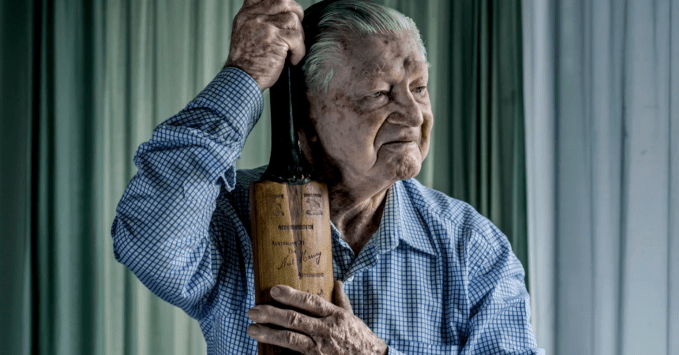
Today, at 92 not out, Harvey is the last man standing from that historic tour and the second oldest living Australian Test player.

It’s a number that is decades advanced from the glory days of his career and seems far too late in life to represent the point at which a definitive biography should appear. And yet that is what former cricketer and journalist Ashley Mallett has written.

His evocatively titled book The Last Invincible has connotations of Valhalla to it and there is no shortage of cricketing gods referenced within its pages.

It cannily taps into the aura of a near perfect team and of Bradman – that sporting freak, described on his retirement by writer R.C. Robertson-Glasgow as a “flawless engine”.

The Don’s legend has been so great as to even defy the disinterest of today’s young cricketers in jerky black-and-white reels reproduced on YouTube and Pinterest pages of once dun-coloured newspaper pages, brightened with phone filters.

Harvey’s has been more muted, even though by the time of his retirement in 1963 only Bradman had scored more runs and made more Test centuries.

But in the era of the Big Bash League, Steve Smith (with his extraordinary 61 average) and the not so distant wake of Ricky Ponting, many who saw Harvey play (averaging just under 50, with 21 tons) still think of him as Australia’s best batsman after Sir Donald – and Mallett is one of them.

“He was so neat and compact and so unflurried getting down the track to the spinners, it was quite amazing,” he says.

“I would have loved to have bowled to him, but I would have got belted around. Harvey was probably the best fieldsman Australia’s produced too; he could throw down the stumps diving in mid-air with only one stump visible, and he did that regularly.”

Not so much about that stardust-tinged tour or its elite membership, The Last Invincible is more a tap on the shoulder to later generations of fans about a boy wonder who was the real deal, while others came and went.

“I think I set out to write Harvey’s story and everything else, but also to reassert his place in Australian cricketing history,” Mallett says, his voice crackling down the line from his Adelaide home. “I think he’s been largely forgotten.”

Before qualifying the remark: “Harvey isn’t the only one. Ray Lindwall and Alan Davidson also fall into that category.

“He’s had all the accolades, he’s got in the Hall of Fame and has a statue outside the MCG, but I wanted to bring it to the modern reader to say that here’s a bloke who’s as good as anyone since Bradman.”

Mallett, himself a former Test spin bowler with 132 scalps, is not unfamiliar with holding his own in a red-hot team full of legends, suiting up throughout the 1970s alongside the Chappell brothers, Jeff Thomson, Rod Marsh and Dennis Lillee.

And in Harvey’s adeptness against spin, Mallett saw a possible antidote to the lack of nuance in how batsmen today play the spinners.

“There’s no getting down the wicket and pushing for twos,” Mallett says. “You wait ’til you get a bad ball and whack it for four. It’s either block or slog. Whether that comes from the T20 I don’t know, but it’s a crazy way of playing the spinners and it seems to be the modern way.

“That’s when I started to think this is a book I could do and bring in Harvey, the way he played.”

The book delves not just into the history of Harvey but also the nostalgia of boyhood, when Mallett first got bitten by the cricketing bug.

Among the match reports, Mallett knits together memories of his grandfather taking him to the SCG when he was nine to see the “veritable gods of Olympus” warming up in the nets before the second Ashes Test against England in Sydney in 1954: Harvey batting, Frank “Typhoon” Tyson sending down thunderbolts alongside him, Bradman leaning on the nets, whispering instructions.

“It was heaven on Earth in a way,” says Mallett. “My grandfather was a great advocate of cricket and was able to talk to me about it; he knew the game.

“He loved watching [Victor] Trumper play when he was a young bloke and then later on watching Bradman. He reckoned Harvey was a bit like a left-handed Trumper because he had all the grace and the movements, tremendous footwork and unhurried. It really struck him that he had plenty of time – time to play the quickest of bowlers.”

Mallett has approached his task with forensic zeal and there’s a depth of detail in the book, from anecdotes about some of history’s greatest games to obscure details about Harvey’s administrative role in his wife’s Tupperware business.

But life and cricket are complicated, and the book also examines the sporting politics that shaped the Australian team and determined the legacies of those who played for their country.

“Harvey had his own opinion, all his life,” says Mallett. “He’s always aired his opinion. And he hasn’t held back. He doesn’t hold back at all.”

As a selector, after Harvey’s retirement, his frank assessments of the Australian team would sometimes put him at odds with players, and as a player himself, Harvey’s tendency to speak his mind didn’t endear him to the cricket establishment. It probably cost him the captaincy in 1957, when he was passed over for Ian Craig, then but a six-Test veteran and aged just 22.

“I think he’s been misunderstood totally by the modern cricketers,” says Mallett. “If he went along and had a chat to them in the dressing room they’d love the bloke and embrace him straight away.

“He talks passionately about the game and about the players, and he reveres some of the modern players, talking about Warnie as ‘the best I’ve seen’. He gives credit where it’s due. There’s none of this sort of, ‘Oh, we were far better in the old days.’”

Only at the tail of his career did Harvey get to captain Australia, stepping in for the injured Richie Benaud (who had “torn the subscapularis right down to the capsule that contains the shoulder”) in the 1961 Lord’s Test.

Not afraid to paint grand scenarios, Mallett’s reconstruction of this match sounds more like a trudge up Pork Chop Hill under heavy fire.

The encounter was marked by a protuberance in the batting surface from the top of an old drain under the pitch, which the players dubbed “the Ridge”. It was a fast bowler’s delight, which Harvey relates made the ball “fly off at strange angles and odd heights”.

The conditions were tough for both sides, but Australia won the Test easily after an inspired decision by Harvey to have 19-year-old debutante Graham McKenzie “attack the Ridge” – scuttling five of the English bats for just 37.

Perhaps part of the problem with Harvey’s fading legacy has been his self-effacing nature, and Mallett notes that getting his story wasn’t easy.

In fact the only other significant book about the cricketer is Harvey’s own, My World of Cricket, published in 1963, which is full of cricketing anecdotes but reveals surprisingly little about the author himself.

“It’s very hard to get him to talk about himself,” Mallett says. “He knew how good he was, but he doesn’t go around spouting about it.”

Neil Harvey The Last Invincible by Ashley Mallett (Hardie Grant) is published on July 28.

First published in The Australian Financial Review on July 23, 2021

Politics, purgatory and playing the game

They arrived a band of misfits, sporting gunslingers who had chosen cricket over country and money over morals, and they were to all pay a high price for it – but the truth of the West Indies’ rebel tours of South Africa in the apartheid era has never been black and white.

Theirs is a story not just of racism and ethics, but of the gap between rich and poor, of hypocrisy, of ambition, of ego, of macho anti-authoritarianism and of the shifting attitudes in sport and politics at the time that would significantly reshape the world we live in now.

The full, layered history of the 20 rebels, who returned home pariahs from those tours, banned from cricket for life (even at a club level), has for the first time been thoroughly detailed in a book by Australian sports writer Ashley Gray.

Shootings, drugs, mental illness and homelessness – The Unforgiven: Mercenaries or Missionaries? burrows deep into the boyhoods, careers and decline of these men who once had the world at their feet, but came down on the wrong side of history.

For some, the fall from grace was absolute, but even for those who rebuilt their lives the bitter aftertaste of the rebel tours of South Africa lingers on.

Gray, who made numerous fact-finding trips to the Caribbean and North America, as well as conducting interviews in South Africa, England and Australia, had the topic on his mind since first stumbling across one of the down-and-out rebels on the streets of Cross Roads in Kingston 17 years ago.

“It began with a conversation with a cabbie in 2003,” says Gray from splendid self-isolation at his home in Tempe, in Sydney’s inner west.

“It was during Australia’s four-test series against the Windies and I was doing stuff for Inside Cricket and on my way to a one-dayer at Sabina Park, when the driver told me Richard Austin was now begging on the streets, doing drugs and other things.

“He drove me and a mate to Cross Roads, the commercial district of the city, where we found Austin running with a gang.”

By this stage of his life Austin, who had played two tests for the West Indies before being dropped for joining the World Series Cricket (WSC) circuit, was 48 and spent most of his days walking the streets barefoot, high on rum and cocaine.

A once gifted athlete – he excelled at football and table tennis – he could bat anywhere in the order, keep wicket and bowl spin or seam. The great West Indian keeper-batsman Jeffrey Dujon described him as the most talented all-round cricketer he had ever known.

But Austin, who died in 2015, was just one of the many gifted West Indies cricketers lured to South Africa by the shunned nation’s cricket chief Ali Bacher, acting like an administrative P.T. Barnum.

Among them you could have easily picked a Seven Samurai of magnificent outcasts, with plenty of room for more.

There was Lawrence Rowe, the only batsman to ever score a double century and century on Test debut; the former West Indies captain and 66-test great Alvin Kallicharran; David Murray, the country’s finest wicketkeeper at the time, who was only displaced from the Test team by the exceptional batting of Dujon; Franklyn Stephenson, regarded as the best player never to appear officially for the West Indies; all-rounder Bernard Julien, once labelled the new Gary Sobers; fearsome pace bowler Colin Croft, who still holds the best Test figures for his country as a fast bowler; and all-rounder Collis King, who starred alongside Viv Richards in the Windies 1979 one-day World Cup final win.

Many of these players, despite their bans in the West Indies, went on to play county and regional cricket in England and South Africa and carve out lesser careers even while stigmatised by the blood money tours. But some struggled badly.

Gray, who writes about the men with affection and a real sense of empathy for their plight, says: “With some of these young guys it really messed with their heads. Herbert Chang ended up in a mental institution at one stage.

“When Everton Mattis came back to Jamaica he said the cops were after him, making life difficult. So he escaped to New York where he ended up becoming a cocaine dealer and got shot.”

Years earlier – before the stigma of the tours in 1982-83 and 1983-84 – Mattis had found even out-scoring everyone but Viv Richards in his second match for Clive Lloyd’s West Indies team was not enough to crack a regular spot in one of the greatest cricket sides of all-time. The pendulum, for him, had already swung.

“The reaction in Jamaica was more extreme than in the other islands in the Caribbean and Mattis, Rowe, Chang and Austin were dealt with very harshly when they came back,” says Gray.

“There had been big slave rebellions in Jamaica that didn’t happen so much in the other islands, which gave it much more of a history about who you are and where you came from.”

The white supremacist apartheid culture of South Africa, which segregated blacks from whites, had been unravelling for some time with boycotts of sporting events and the exclusion of the country from the Olympics since 1964. But sportspeople and entertainers still regularly took the coin of promoters to appear in places like Sun City, giving the regime an air of business as usual.

At the time of the rebel tours Nelson Mandela, the country’s future president and unifier, was still incarcerated at Pollsmoor Prison in Cape Town.

Other countries, including Australia, England and Sri Lanka, carried out unofficial rebel tours of South Africa during apartheid, with the players facing bans of a couple of years for their troubles – but none copping the vilification or penalties the West Indies received for their perceived race betrayal.

But the motives of the rebels were complex. Some simply saw it as their lot as professional cricketers. Needing to feed their families in a sport that still paid very little, a player could earn from two rebel tours between $80,000 (60 times the average wage in Jamaica) and $150,000.

A few, locked out of the national side, seemed to be raising a defiant finger to officialdom.

Others genuinely regarded the tour not as something that would prop up the apartheid system, but which might help bring it down – showing successful black sportsmen competing and bettering their white counterparts.

And the touring players were an immediate hit, adored by the mostly white crowds that came to see them. That contrast, or conflict, with apartheid could not be lost on anyone.

The backdrop to all of it was the era of World Series Cricket, where Kerry Packer’s rebel tournament in Australia had fragmented national sides, creating a gun-for-hire culture that accelerated professionalism in the sport while also shredding the quaint notion of cricket being a gentleman’s game.

“As far as the white (South African) population goes it was eye-opening for them,” says Gray. “They hadn’t seen anything like this in the flesh. They hadn’t seen professional black sportspeople.

“Franklyn Stephenson is still very angry about it. He sees them as liberation tours and draws a link to the end of apartheid, and he thinks it stimulated that. He says they should be lauded because in WSC players were mercenaries, they just took the money Kerry Packer gave them.

“But these guys who went on the rebel tours, in his eyes they had a cause, so there was a moral purpose to it.”

Perhaps the most enigmatic and complicated player among the rebel cricketers was the touring captain Rowe, seen before his fall from grace (and to an extent by many of his countrymen still) as a national icon.

Ostracised on his return he emigrated, as was the case with a lot of the rebels, and now lives in Miami, like Jamaica’s king in exile.

“He saw himself as a martyr,” says Gray. “He thought he was just playing the game and it was a practical thing he did for his family.”

As pig-headed in character as he was sublime with his batting, Rowe remains resolute the rebels were victims of politics and did nothing wrong.

“I had such a strong belief in the cause,” he told Gray. “The only person who can convince me that is not so is Jesus Christ. If he comes down to me and says, ‘You are wrong’, I will apologise.”

The Unforgiven: Mercenaries or Missionaries? The Untold Story of the Rebel West Indian Cricketers Who Toured Apartheid South Africaby Ashley Gray (Pitch Publishing).

Originally published in The Australian Financial Review on May 30, 2020.

The rime of the Australian ball tamperer

Like the ancient mariner Trevor Chappell finally emerged this week from his decades-long exile of public opprobrium to pass on his curse.

With a glittering eye the villain of the underarm bowling incident of ’81 gleefully announced he was no longer the most hated man in Australian sport.

He cast it off, more happy to be rid of the albatross around his neck than sorry for what awaited the disgraced Australian cricket captain Steve Smith.

Smith, the player feted as our greatest batsman since Don Bradman, this week held two of the worst press conferences of his life.

Naively thinking a manly admission of guilt could get him ahead of the controversy, he set off.

He’s not good at facing the press anyway, but even by his lacklustre standards the train departed the station and promptly derailed.

By week’s end Smith had reverted to a boy, bawling his eyes out and blubbering for forgiveness from a steely public that had already made up its mind.

The brightest star, and future of the country’s Test team, had lost sight of the gap between perception and reality.

For the truth is there are 101 ways to cheat at cricket and pretty much everyone has done it.

The national team’s ball tampering is in the headlines, but the message to take whatever advantage you can in the game begins at an early age.

In under 16s cricket, playing in the local final, I remember the opposition coach beating the ground violently with a mallet and screaming at his young charges when they failed to slow down the game enough, allowing another over that saw us tie with them. Before that, they had run down the clock with their time-wasting, strangling our opportunity to win.

You can call that tactics, but it’s not sporting. It wasn’t fair.

Playing grade cricket, where you often have to double up as an umpire adjudicating against your own players, I learned fast: Don’t ever give an lbw.

Having raised the finger to my own captain when he was struck plum on the pads, cowering against the stumps, I got the mother of all dressing downs in front of the team back on the sidelines.

And, when it was my turn to bat, my aggrieved teammate came out to umpire and immediately gave me out, caught, even though the ball had sailed past my bat without a connection. He’d asked one of the opposition players (who was happy to oblige) to appeal the first ball I swung at and missed.

It was an important lesson. Cricket is firstly about winning and secondly about loyalty to your team. Not honour. Not fair play.

It’s treated that way by everyone involved, from the grounds staff that prepare a pitch to favour the home side to the deliberate scuffing of the ball to achieve swing; the sledging that greets a new batsman at the crease, or the unwillingness to walk when you’re out.

It’s just not cricket!

Well, it is actually. That’s very much what cricket is.

And it is against that background that our national team has come unstuck.

There is a gaping chasm between public perceptions of the game and an often brutal reality. The same reality that saw cricket arrogantly close its ranks at the inquest into Phillip Hughes’ death. Nothing to see here.

Everything that has happened in this past week has clung to that ethos.

The decision to rough up the ball with sandpaper (why on Earth choose bright yellow?), the man-child captain invoking a mysterious ‘leadership group’ to explain away his decision.

It would be churlish to cite the numerous examples of cheating in international cricket, the match fixing, the drugs, the slinging.

Or, even just the huge level of hypocrisy exhibited in the comments of some former players who are no saints themselves.

The cheats’ wheel of misfortune has landed on most countries, and now it’s our turn.

A sadder and a wiser man, Steve Smith has learnt it the hard way.

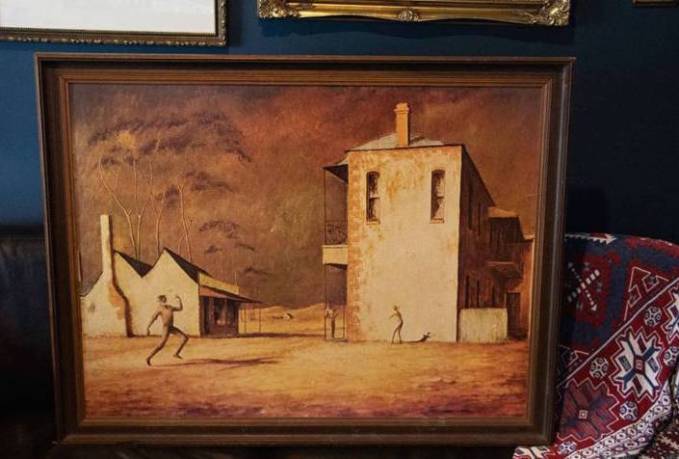
(Originally published in The Daily Telegraph. Painting: The Cricketers by Russell Drysdale)

Serena’s simply the best – across all tennis

She’s the best tennis player of her generation.

And I’m not just talking about the women’s game. It’s not just Sharapova or Clijsters or Henin or her sister Venus she has trumped. Serena Williams has made the men’s champs Federer, Nadal and Djokovic look like also-rans.

She’s better than the lot. And it’s time she got some love.

Serena now stands on the verge of being the greatest player of all time as she attempts to win a calendar grand slam at the US Open in eight weeks’ time, which will equal the record of Steffi Graf and put her two away from reeling in Margaret Court.

Few doubt she will do it.

Despite this, the women’s world number one has rarely been a favourite with the crowd or the media.

She’s familiar with the fact the fans are more often on her opponent’s side — the underdog. She has taken the jibes about her muscularity, knowing that many tennis fans seem to think she has an almost unfair physical advantage.

And through all that, though it must have rankled, she has remained gracious and good-natured.

When the Williams sisters burst on the scene, they were given plenty of stick. As the two softly-spoken girls from Florida cut a swathe through the mostly white ranks of the professional women’s circuit there was an edge of panic in the media and the establishment.

It was rarely verbalised but the underlying issue was race. Was this the point where the prowess of black athletes transformed the sanctity of a comfortably closed shop for white people? Like the 100m sprint at the Olympics, like the ranks of the heavyweight boxing champions once dominated by preternaturally large Italians, Jews and Irish. The same went for Tiger Woods and golf.

It was given voice at the 2001 Indian Wells Masters when the crowd turned on Serena and her family in the gallery. After Venus withdrew from her match with an injury, father Richard was accused of pulling her out so Serena could win. The sour grapes that bubbled beneath the surface vented spitefully and unfairly. The mask dropped. The sisters boycotted Indian Wells.

In the media, Richard was portrayed as a stage parent, living out his dreams through his children, driving them obsessively. Even his presence with wife Oracene at their matches was questioned, with the implication he had too much control over his prodigious daughters.

Though it seemed from the outside to be a close, stable, loving family, efforts were made to destabilise that and to bring the Williams sisters down a notch.

The dynamic of their relationship was also brought into question. ‘They were rivals who hated to lose to one another’. Venus, who initially was the dominant player of the two, was said to be ‘hurt’ by her little sister’s success.

And all of this bedded in over time.

Venus ultimately became more accepted the more she lost. Her tally of seven grand slams, while incredible, would never threaten the established hegemony in tennis.

But Serena didn’t stop, she went on winning.

Unlike the other top tennis players, she picked and chose her events with an eye more on the quality of her own life. She avoided much of the WTP tour to pop up at a grand slam and take it home with her. In the past 15 grand slams she has won eight. Only Federer’s run of 11 in 16 between 2004 and 2007 is better in the modern era.

With her Wimbledon win she became the oldest woman to hold all grand slam titles simultaneously.

And yet it is not even the records, but her manner of winning that has set her apart — speed on the court, agility, strength and more than anything, grit.

(Originally published in RendezView)