Cricket’s ‘deadly’ consequences underplayed and underreported

I was fielding at square leg when the ball flew high over my head, struck from the western end of the pitch at St Andrew’s College in a hurried arc. It took about four seconds to reach my father.

All of 71, he was sitting on a bench talking with my daughter, their eyes averted from the game, and I had already started sprinting towards them, yelling at the same moment the leather projectile zeroed in on him, gashing open his head and sending him sprawling to the ground.

Only later in casualty, as a medic looped seven stitches in his bloodied forehead, did the catastrophising kick in. What if the ball had struck him in the temple? Or hit my child?

Having set up the match myself, I felt a sick pit of culpability in my stomach, like John Irving’s titular hero Owen Meany. The consequences didn’t bear thinking about.

We assume death and serious injury in cricket is freakish and far apart. But that incident seven years ago had me reconsidering, and recent studies have found evidence of a larger, more serious problem than our schoolboy view of the game had previously allowed.

Now, a new book that examines and explains cricket history using different data sources has drawn some unsettling conclusions, raising concerns of the probable significant under-reporting of concussion incidents here in Australia, and that this occurs at a higher rate than elsewhere in the world.

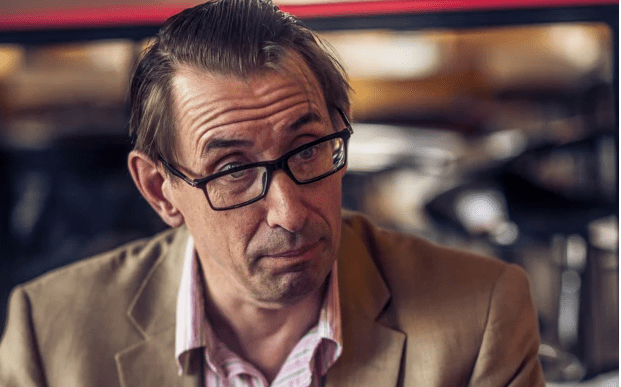
A wide-ranging book, Crickonomics by Stefan Szymanski (pictured above) and Tim Wigmore, answers numerous tantalising questions about Australia’s premier summer sport. If you have wondered whether batters or bowlers are more valuable, why the private school system continues to feed the upper echelons of the game or how women’s cricket has innovated the sport, you are in luck.

But it is the book’s estimate of concussion rates in Australia that makes for the most fascinating reading.

Szymanski, an economics professor at the University of Michigan’s School of Kinesiology, has written a number of books on sport using statistical analysis, including three on soccer.

But the Nigerian-born, UK-raised son of a Polish dad and English mum is just as hooked on cricket and has a netted pitch and ball machine in his backyard (his son Ed, he tells me, is the owner of the fittingly titled Lords restaurant in New York).

“I think there’s always been a resistance to the idea that data can tell us anything,” Szymanski says of Crickonomics, over an early morning (for me) Zoom call. “And there’s a belief that there’s something in the game, which you’re missing out on if you try to put it into numbers, and there’s a spirit of the game and a soul of the game.”

But keeping better data, both writers contend, is where cricket can save lives and prevent injuries.

“The experience of Australia suggests that concussions have been systematically underreported,” Szymanski and Wigmore say.

A cricket ball weighs 163 grams and, with a cork core wrapped in string and sealed with leather, is one of the hardest balls in sport.

Nobody wants to be hit by a cricket ball. A batter, even with the advantage of pads, gloves and a box, still does whatever they can to not be hit by that ball, which has a deep impact regardless of pace – and at true pace can be terrifying.

The death of Phillip Hughes in 2014 from a bouncer that tore the artery below his left ear was one of the few well-publicised incidents to bring the dangers of cricket balls sharply into focus. Before this in Australia, you had to go back to 1975 and the death of 22-year-old Martin Bedkober, a talented Adam Gilchrist-esque keeper/batsman on the verge of state selection, who died after being hit “over the heart” by a ball.

In the decade up to 2014, one concussion a season was reported in Australian cricket. After Hughes’ death, Cricket Australia commissioned La Trobe University to research concussions. It found evidence of 92 head impacts in men’s matches between 2015 and 2017, of which 29 were concussions. Records going back to 1850 revealed 544 cricket-related deaths in Australia, New Zealand, Great Britain and Ireland.

Using data from La Trobe’s 2018 study, and its estimate of a head impact every 2000 balls and concussion every 9000 balls, Szymanski compared it with the number of balls bowled (1,012,160) during the 2019 first class men’s cricket season in Australia. He extrapolated a result of 160 head impacts and 37 concussions for that one season – almost four times current estimates.

According to Szymanski, that puts the rate of head impacts in the Australian domestic game two-thirds higher than the known rate in other cricket-playing countries.

“There are a number of reasons for this,” he says. “Pace bowlers in Australia tend to be faster, spinners deliver a lower share of overs, and the pitches tend to be quicker.”

He laments the lack of data kept on cricket, when compared with sports such as baseball.

“We’ve got [cricket] scorecards from before 1750,” he tells me. “Yeah, well, that’s not enough detail. What you need is a record of every stroke played, every ball delivered. That’s how you can do real performance analysis.

“There are about 200,000 events in a baseball season. And I can get 100 years of baseball seasons. Now, once you’ve got that data, I can do statistical analysis with it and start to identify different things.”

Innovations such as helmets have made a difference, the book says, and there have been just 10 recorded deaths among cricketers in Australia after the introduction of helmets, compared with nine in the previous decade – the 1970s.

But Szymanski says that, despite a decline in deaths, scientific evidence shows the danger of head injuries is greater than previously assumed, and growing.

“There are myriad theories for the increase in head impacts and concussions,” he writes. “Batting technique against short bowling is said to have deteriorated (caused by an over-reliance on helmets) … Limited-overs formats are blamed for encouraging batters to hook the ball more compulsively … Improved strength and conditioning has enabled players to bowl up around 90mph (144km/h) now more frequently than before. And there is simply more cricket played now.”

In March, Cricket Victoria and Cricket Australia cleared Australian batsman Will Pucovski to continue playing despite him having reportedly suffered 11 concussions, the most recent during a Sheffield Shield match in February. According to the two governing bodies, a panel of experts – including neurologists – believed some of Pucovski’s concussions had been misdiagnosed and were actually stress-related responses.

But despite the recent spotlight on concussion, the accumulation of data on the topic has still been piecemeal, and what information is available has often focused on injuries to batters and not other associated incidents.

Additionally, it is becoming clearer that both authorities and the media, over a long period of time, have failed to appreciate the pattern of repeated incidents and to report on them as such. This has contributed to a general nonchalance among players and the public concerning risks.

Cricket statistician Charles Davis found in a search of Trove in 2015 more than 90 separate cases of men, women and children killed by cricket balls from 1880 to the 1950s in Australia. They included players (most of them batsmen), umpires and spectators. Of these deaths, 33 were aged under 16. The youngest, a baby of 11 months, Annie Dennison, was struck by a ball in a backyard game in 1894.

Davis wrote: “Most of these events attracted only fleeting attention, with just a few lines of reportage and no follow-up. In the few reports where any implications were discussed, no one seemed aware of more than a handful of prior cases.

“It was certainly a surprise to find how many times this happened, and how young the victims often were.”

Unlike many statistical compilations, Davis’ work did not include heart attacks during games, which have also contributed to many deaths, but are no different to exercise-induced heart attacks in any sport. (Of this, I can also attest having had a teammate, friend and colleague – Bob Spivey, 56 – die batting in a match in Devon while captaining the Daily Mirror/Sun team the Badgers in 2005. Fare thee well, Bob.)

Szymanski concludes a better record of the game will ultimately reduce the chance of injury or death.

“I think the statistical era of cricket is in some ways beginning now, and will actually develop quite rapidly in the coming decades,” he says.

“Something I’ve always felt very strongly as an economist is you have to understand history, and you have to understand culture and how they interplay with one another … to go back and reconstruct from what data we’ve got, the historical record, in order to get a better picture.”

This story was originally published in The Australian Financial Review newspaper on November 12, 2022.
Politics, purgatory and playing the game

They arrived a band of misfits, sporting gunslingers who had chosen cricket over country and money over morals, and they were to all pay a high price for it – but the truth of the West Indies’ rebel tours of South Africa in the apartheid era has never been black and white.

Theirs is a story not just of racism and ethics, but of the gap between rich and poor, of hypocrisy, of ambition, of ego, of macho anti-authoritarianism and of the shifting attitudes in sport and politics at the time that would significantly reshape the world we live in now.

The full, layered history of the 20 rebels, who returned home pariahs from those tours, banned from cricket for life (even at a club level), has for the first time been thoroughly detailed in a book by Australian sports writer Ashley Gray.

Shootings, drugs, mental illness and homelessness – The Unforgiven: Mercenaries or Missionaries? burrows deep into the boyhoods, careers and decline of these men who once had the world at their feet, but came down on the wrong side of history.

For some, the fall from grace was absolute, but even for those who rebuilt their lives the bitter aftertaste of the rebel tours of South Africa lingers on.

Gray, who made numerous fact-finding trips to the Caribbean and North America, as well as conducting interviews in South Africa, England and Australia, had the topic on his mind since first stumbling across one of the down-and-out rebels on the streets of Cross Roads in Kingston 17 years ago.

“It began with a conversation with a cabbie in 2003,” says Gray from splendid self-isolation at his home in Tempe, in Sydney’s inner west.

“It was during Australia’s four-test series against the Windies and I was doing stuff for Inside Cricket and on my way to a one-dayer at Sabina Park, when the driver told me Richard Austin was now begging on the streets, doing drugs and other things.

“He drove me and a mate to Cross Roads, the commercial district of the city, where we found Austin running with a gang.”

By this stage of his life Austin, who had played two tests for the West Indies before being dropped for joining the World Series Cricket (WSC) circuit, was 48 and spent most of his days walking the streets barefoot, high on rum and cocaine.

A once gifted athlete – he excelled at football and table tennis – he could bat anywhere in the order, keep wicket and bowl spin or seam. The great West Indian keeper-batsman Jeffrey Dujon described him as the most talented all-round cricketer he had ever known.

But Austin, who died in 2015, was just one of the many gifted West Indies cricketers lured to South Africa by the shunned nation’s cricket chief Ali Bacher, acting like an administrative P.T. Barnum.

Among them you could have easily picked a Seven Samurai of magnificent outcasts, with plenty of room for more.

There was Lawrence Rowe, the only batsman to ever score a double century and century on Test debut; the former West Indies captain and 66-test great Alvin Kallicharran; David Murray, the country’s finest wicketkeeper at the time, who was only displaced from the Test team by the exceptional batting of Dujon; Franklyn Stephenson, regarded as the best player never to appear officially for the West Indies; all-rounder Bernard Julien, once labelled the new Gary Sobers; fearsome pace bowler Colin Croft, who still holds the best Test figures for his country as a fast bowler; and all-rounder Collis King, who starred alongside Viv Richards in the Windies 1979 one-day World Cup final win.

Many of these players, despite their bans in the West Indies, went on to play county and regional cricket in England and South Africa and carve out lesser careers even while stigmatised by the blood money tours. But some struggled badly.

Gray, who writes about the men with affection and a real sense of empathy for their plight, says: “With some of these young guys it really messed with their heads. Herbert Chang ended up in a mental institution at one stage.

“When Everton Mattis came back to Jamaica he said the cops were after him, making life difficult. So he escaped to New York where he ended up becoming a cocaine dealer and got shot.”

Years earlier – before the stigma of the tours in 1982-83 and 1983-84 – Mattis had found even out-scoring everyone but Viv Richards in his second match for Clive Lloyd’s West Indies team was not enough to crack a regular spot in one of the greatest cricket sides of all-time. The pendulum, for him, had already swung.

“The reaction in Jamaica was more extreme than in the other islands in the Caribbean and Mattis, Rowe, Chang and Austin were dealt with very harshly when they came back,” says Gray.

“There had been big slave rebellions in Jamaica that didn’t happen so much in the other islands, which gave it much more of a history about who you are and where you came from.”

The white supremacist apartheid culture of South Africa, which segregated blacks from whites, had been unravelling for some time with boycotts of sporting events and the exclusion of the country from the Olympics since 1964. But sportspeople and entertainers still regularly took the coin of promoters to appear in places like Sun City, giving the regime an air of business as usual.

At the time of the rebel tours Nelson Mandela, the country’s future president and unifier, was still incarcerated at Pollsmoor Prison in Cape Town.

Other countries, including Australia, England and Sri Lanka, carried out unofficial rebel tours of South Africa during apartheid, with the players facing bans of a couple of years for their troubles – but none copping the vilification or penalties the West Indies received for their perceived race betrayal.

But the motives of the rebels were complex. Some simply saw it as their lot as professional cricketers. Needing to feed their families in a sport that still paid very little, a player could earn from two rebel tours between $80,000 (60 times the average wage in Jamaica) and $150,000.

A few, locked out of the national side, seemed to be raising a defiant finger to officialdom.

Others genuinely regarded the tour not as something that would prop up the apartheid system, but which might help bring it down – showing successful black sportsmen competing and bettering their white counterparts.

And the touring players were an immediate hit, adored by the mostly white crowds that came to see them. That contrast, or conflict, with apartheid could not be lost on anyone.

The backdrop to all of it was the era of World Series Cricket, where Kerry Packer’s rebel tournament in Australia had fragmented national sides, creating a gun-for-hire culture that accelerated professionalism in the sport while also shredding the quaint notion of cricket being a gentleman’s game.

“As far as the white (South African) population goes it was eye-opening for them,” says Gray. “They hadn’t seen anything like this in the flesh. They hadn’t seen professional black sportspeople.

“Franklyn Stephenson is still very angry about it. He sees them as liberation tours and draws a link to the end of apartheid, and he thinks it stimulated that. He says they should be lauded because in WSC players were mercenaries, they just took the money Kerry Packer gave them.

“But these guys who went on the rebel tours, in his eyes they had a cause, so there was a moral purpose to it.”

Perhaps the most enigmatic and complicated player among the rebel cricketers was the touring captain Rowe, seen before his fall from grace (and to an extent by many of his countrymen still) as a national icon.

Ostracised on his return he emigrated, as was the case with a lot of the rebels, and now lives in Miami, like Jamaica’s king in exile.

“He saw himself as a martyr,” says Gray. “He thought he was just playing the game and it was a practical thing he did for his family.”

As pig-headed in character as he was sublime with his batting, Rowe remains resolute the rebels were victims of politics and did nothing wrong.

“I had such a strong belief in the cause,” he told Gray. “The only person who can convince me that is not so is Jesus Christ. If he comes down to me and says, ‘You are wrong’, I will apologise.”

The Unforgiven: Mercenaries or Missionaries? The Untold Story of the Rebel West Indian Cricketers Who Toured Apartheid South Africaby Ashley Gray (Pitch Publishing).

Originally published in The Australian Financial Review on May 30, 2020.

Where the big trees are

Three and-a-half metres across and 111 hand spaces around, a solid column of wood, 17 storeys high rises straight up out of the bush above us.

Here in the bird quiet of Myall Lakes National Park, the kids have momentarily shut off Roblox and put their phones down to marvel at the huge old eucalypt. And I have too, craning my neck back, and back … and still further, to see its top.

At 76m high The Grandis, a 400-year-old flooded gum, is NSW’s tallest tree despite having its crown smashed by lightning on a couple of occasions.

Surrounded by numerous other giants of a similar age and diameter, it reigns as the king of the forest at Bulahdelah on the state’s Central Coast.

And like most of the country’s living giants, finding it requires a bit of bush bashing — in this case the gully of big trees takes a long drive down a dirt track off the Pacific Highway.

Since seeing the 1952 Kirk Douglas film The Big Trees, about California’s giant redwoods, I’ve been fascinated with the majesty of these ancient colossi.

But not many Australians know that five of the world’s 10 tallest trees are in Australia, including the second tallest in the world — Centurion, a giant mountain ash eucalypt in Tasmania’s Arve valley — that comes in just under 100m. Only the 115m Hyperion coast redwood in Humboldt Redwoods National Park, California, is greater.

“In Australia there’s none of the national pride that Americans enjoy with both the redwoods and the giant sequoia,” says Steve Pearce, 39, of Hobart-based Tree Projects.

“The Americans are so much more enthused by the symbolism of their giant trees than Australia.”

Pearce, who with arborist Jen Sanger travels the world researching and photographing giant trees, is among a growing band of tree lovers trying to preserve Australia’s old-growth forests.

But height is not the only measure of greatness in trees: age, circumference, spread and historical significance all have their place.

The Huon pines of Tasmania, which can live for 3000 years, and the prehistoric Wollemi pine, discovered 150km northwest of Sydney in 1994, which can live for 1000, are among the oldest in the world.

We talk of “the bush” in Australia, but about 19 per cent of the country’s land mass is forested — 147 million hectares of rainforest, melaleuca, eucalypt, acacia, mangrove, casuarina and callitris — with climates varying from alpine, desert and tropical.

Among those zones exist a huge variety of mega-flora, from the karris eucalypts of Western Australia, which can reach 90m, to the boabs of the Northern Territory, which swell to 5m or more in diameter.

In NSW the Old Bottlebutt red bloodwood near Port Macquarie is the largest of its kind in the southern hemisphere, while Middle Brother National Park on the mid-north coast is home to the giant blackbutt trees Benaroon and the Bird Tree, the biggest of their species with girths of 15m and 11m respectively.

Sydney’s huge Moreton Bay figs are so plentiful few are considered for historic preservation, sometimes resulting in controversy. Two years ago Randwick’s 150-year-old Tree of Knowledge was cut down to make way for the light rail expansion.

And there are the historic trees, planted by early settlers, or engraved with directions, like the Mermaid boab.

It was named by English Admiral Phillip Parker King after his ship the HMC Mermaid beached at Careening Bay in the Kimberley. The inscription by the ship’s carpenter, marking its name and the year (1820) is still clearly visible 198 years later.

In Carramar, Western Sydney, the Bland Oak is a local institution. Planted by Dr William Bland in 1842 it has just been added to the National Trust’s register, which documents and protects more than 2000 significant trees.

Graham Quint, the director of Conservation at the National Trust of Australia, says many of the country’s big trees have been lucky to survive on “road reservations” where the roads haven’t been extended. “They cleared the rainforests for the farms and suburbia and these big trees are sort of left there as remnants,” he adds.

“It is almost impossible to grow another one like that now. They are the remnants of the old forests, some growing for hundreds of years. If you tried to grow one now without the protection of the rainforest they would never get to that height.”

The National Trust combines protecting historic streets of trees, such as King George V Memorial Ave’s oaks in Tamworth and trees planted by early explorers.

“The problem with school playgrounds is the threat of branches dropping from coral trees and eucalypts in particular, which will just fall over without warning,” Quint says. “It’s balancing public safety. And we tend not to list the Moreton Bays because they are so common.”

He adds preserving great trees in Australia is made harder by the elements.

“The bigger the tree the more likely, with white ants and all the problems we’ve got here, bushfires and high winds, the harder to keep them alive. In Japan, they prop them up.”

Sydneysider Derek McIntosh, a retired quantity surveyor, started the National Register of Big Trees website a decade ago. “When you’re touching a tree, looking at the bigger older ones, you think ‘they’re a survivor’,” the 77-year-old says.

“There’s a great depth of love and recognition of trees and their importance.”

As a child growing up in South Africa, McIntosh developed a love of trees from his father who would take him into the Kruger National Park to look at the wildlife.

He now documents what he calls champion trees, the biggest of the genus around Australia.

“Farmers are the major custodians of our trees and plants. I go to these farming properties and many of them have survived because they’ve been protected from loggers and urban sprawl,” he says.

“We have this perception of gum trees being everywhere in this country, but there is a huge variety.”

Arborist Jan Allen, from the Veteran Tree Group Facebook site, says: “Our main concern has been the loss of older trees within urban areas. We are trying to touch the general populace and get some appreciation for these old trees, to understand their importance.

I don’t think a lot of Australians really know the calibre of trees we have

“The old trees are often the biggest and the best in terms of wildlife and being the centre of an ecosystem. They are often performing very well, even in an urban environment.”

Allen, who lives in Currumbin Valley on the Gold Coast, started the group as a social club with other arborists six years ago after being inspired by Great Britain’s Ancient Tree Forum.

“We could see people advocating for urban trees but no one in particular advocating for older trees,” she says. “But we also need to ensure new generations of trees are planted and encouraged, and to get to the stage where they provide the right habitat that is missing.”

Sanger, 34, who runs tree-climbing clinics, says: “Tree climbing is that next level and it can be quite a magical, Zen-like experience getting up there and exploring a tree.

“Walking along the forest floor it’s very dark and shady, but when you’ve actually climbed up in the tops of these trees it’s more like being in an open field and it’s bright and sunny and there’s insects buzzing around.”

Pearce adds: “I don’t think a lot of Australians really know the calibre of trees we have.

“That’s just a fact of modern life and people having short attention spans. I’d challenge anyone not to feel slightly relaxed if they did spend time out in a forest or even a park.”

Originally published in The Daily Telegraph as ‘Land of the Giants: Australia’s great trees need more recognition’, on September 14, 2018.

Why I can’t wait to see Oscar Pistorius run again

I’m looking forward to the day Oscar Pistorius gets out of jail. I’m hoping he will continue his career as a runner.

I genuinely hope he’s out in time to contemplate a return to the track.

Because if he does I can’t wait, I literally cannot wait, to hear the jeers.

Forget the fact no reputable athletics organisation will ever let him compete for them. In Oscar’s mind the bans won’t last. In Oscar’s mind he will think he can be a hero again.

I want to watch him stand in the midst of a stadium with the boos ringing around his ears, and for him to feel the revulsion and hate of the crowd he thrived on.
 That, I believe, will be the only punishment that gets through to Oscar Pistorius.

I’m not saying he shouldn’t be serving 15, or 20, or 25 years in jail.

But watching his reaction to the verdict on Wednesday, in which Judge Masipa dished out a paltry six year term, it was clear he was unperturbed, even perhaps relieved.

There was no wavering of that conceited demeanour.

Oscar still sees himself as the victim – not the woman he killed, his girlfriend, the person he was meant to protect.

Judge Masipa said he was “genuinely remorseful” (She should have gone to Specsavers) and dismissed it as not an incident of domestic violence.

Anyone with an ounce of sense in them intuitively understands that is exactly what happened to Reeva Steenkamp when she was gunned down cowering behind a toilet door.

I can’t help but see comparisons with OJ Simpson.
How pleased he was when he beat the charges that he’d murdered his ex-wife Nicole and her friend Ronald Goldman.
Again, there was that similar air of delusion that he could get away with it, and had.
How many violent men have told their partners they can get away with violence, even murder, because everyone ‘knows’ they are a good bloke?
Oscar may well have said the same to Reeva as he came after her in a blind rage. You can see it in his face. The arrogance, the self pity.
Again I was reminded of another killer – British murderer Ian Huntley, who having murdered two little girls and burnt their bodies, was defined by his simpering self-pity.
He too somehow felt victimised, he was the unlucky one – caught out. He craved sympathy.
Oscar does the same.
He’s a narcissistic personality disorder looking for a tragedy to instigate.
Oscar would have told himself, while unloading a clip through that door, everyone would treat him as the grieving boyfriend. That he would have their sympathy, their love. Deluded.
OJ Simpson found even though he’d won his trial he was shunned by many people and his career in sports commentary and acting was finished. It gradually, slowly, dawned that there was an impact on him, that despite what the law said people weren’t fooled by his act. The first doubts began to creep into that almighty ego. He eventually drifted into crime and ended up where he belonged – in prison with plenty of years to reflect.
When Oscar Pistorius gets out of jail – way too early. When he walks down a public street a free man once more. And if he ever attempts to continue that career on the track, I hope to God the realisation he has pulled the wool over no one’s eyes, and that adulation has been replaced with detestation, hits him like a sledgehammer.
(Originally published on RendezView)