What is love? Alain de Botton has a shot at explaining

Few subjects intrigue and inspire people more than love, and yet it remains a baffling, misunderstood emotion.

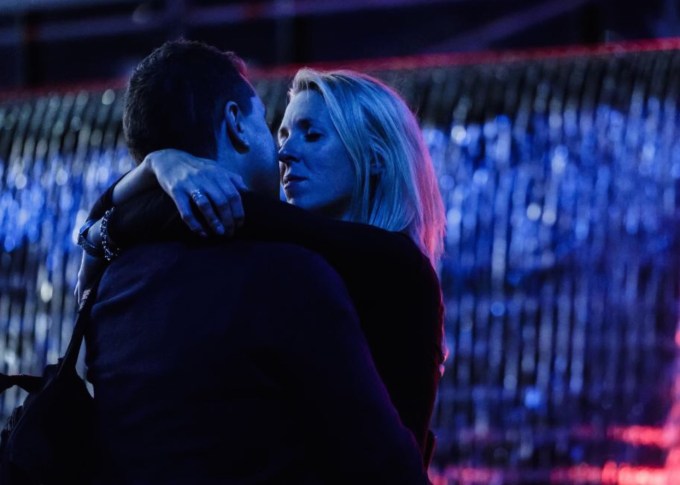
We carefully reserve saying “I love you” but even this, often monumental, decision hides more complex thoughts and feelings that can be painful to admit.

Quite often what we are really saying, philosopher Alain de Botton says, is “I need you”, “you make me feel safe” or “wanted”.

Saying those three words is the simplest way we’ve found to admit our own essential vulnerability.

The English philosopher is travelling around Australia, dispensing his brand of relationship advice on the back of his latest book The Course Of Love.

A spookily accurate analysis of a relationship, the story about a couple falling for each other and navigating their way through marriage, children and ageing, delves into what motivates feelings.

When I catch-up with de Botton, he’s bouncing about on the balls of his feet and, despite being halfway through a dozen interviews, is clear-eyed and energised, keen for conversation.

With books on subjects as diverse as religion for atheists, status anxiety and the therapeutic benefit of art, plus his School Of Life where he gives relationship advice to couples and families, the 46-year-old has become a dab hand at analysing modern existence.

“I think there is a great hope that love can somehow solve some of the incompleteness of other areas of our lives and that’s a beautiful idea but it’s also quite a dangerous idea,” he says. “There is only so much that your partner can ever solve.

“It’s a hangover from a childhood belief that the parent can make it all OK.

“The first people that we love are these incredible, impressive, capable people … and I think there is this idea that our lovers, who are competent in many areas, are going to be able to make it all OK.”

He adds: “Of course at some point you realise they can’t and one choice is to throw them overboard and the other is to accept that with lots of areas of life they can put an arm around us.

“But they can’t spare us the ultimate fate that we’re headed towards, which is death, decline and failure at a cosmic level, and it’s tremendously hard.”

De Botton says that in the past people turned to God for the same sense of protection and love, but society had increasingly placed this expectation on intimacy in a relationship.

“God was always patient, could always understand, could always forgive,” he opines.

“We take those hopes to love with a human and it’s much trickier there.

“Society only gives us one model: the couple. And it really censors anyone who can’t make that work.”

It has been 12 years since I last sat down with de Botton and he appears to have aged very little.

The setting is different, not his grey-toned, impeccably ordered London home, but a plush hotel in downtown Sydney. The harbour, like a souvenir tea towel, is laid out before us with all its kitsch adornments.

He bemoans Brexit, “they’ve lost their minds”, before coming back to the topic.

“To love is to extend understanding to another person and in the face of a considerable number of obstacles, including the other person’s obtuseness, bad moods, peculiar behaviour and depression,” he says.

“It is a mutual process. People say love is communication, communication only matters because what you’re trying to do is understand.

“I think emotions will probably destroy you if you don’t analyse them.

“They are powerful things. Applying reason is good.”

For the next 20 minutes de Botton raps out punchy but thoughtful answers on how couples miscommunicate and end up resenting each other, their inability to express dissatisfaction and the danger of falling into caustic, destructive behaviour.

“Our own insignificance is one of the hardest things to have to accept,” he says.

“Children and adolescents are kept going by a very basic sense of their own importance and what happens in middle age is you really realise ‘I am a temporary grain of sand’.

“Love, I think, in that sense, is a slight illusion. But we need illusions to keep going.”

Feeling a sense of “connection”, he maintains, is key, and can be channelled through things such as work or the love of your children, rather than a romantic relationship.

“The most exciting moments are when someone goes ‘I get that, I understand that, I see you and I can relate’, and then suddenly the world seems less lonely and isolated.”

And so we ascribe love more importance than life, and tell ourselves it is vaster than death.

It is our defiant riposte to the universe — an alliance of like-minds indifferent to the unknown.

(Originally published in The Daily Telegraph)

Why I can’t wait to see Oscar Pistorius run again

I’m looking forward to the day Oscar Pistorius gets out of jail. I’m hoping he will continue his career as a runner.

I genuinely hope he’s out in time to contemplate a return to the track.

Because if he does I can’t wait, I literally cannot wait, to hear the jeers.

Forget the fact no reputable athletics organisation will ever let him compete for them. In Oscar’s mind the bans won’t last. In Oscar’s mind he will think he can be a hero again.

I want to watch him stand in the midst of a stadium with the boos ringing around his ears, and for him to feel the revulsion and hate of the crowd he thrived on.
 That, I believe, will be the only punishment that gets through to Oscar Pistorius.

I’m not saying he shouldn’t be serving 15, or 20, or 25 years in jail.

But watching his reaction to the verdict on Wednesday, in which Judge Masipa dished out a paltry six year term, it was clear he was unperturbed, even perhaps relieved.

There was no wavering of that conceited demeanour.

Oscar still sees himself as the victim – not the woman he killed, his girlfriend, the person he was meant to protect.

Judge Masipa said he was “genuinely remorseful” (She should have gone to Specsavers) and dismissed it as not an incident of domestic violence.

Anyone with an ounce of sense in them intuitively understands that is exactly what happened to Reeva Steenkamp when she was gunned down cowering behind a toilet door.

I can’t help but see comparisons with OJ Simpson.
How pleased he was when he beat the charges that he’d murdered his ex-wife Nicole and her friend Ronald Goldman.
Again, there was that similar air of delusion that he could get away with it, and had.
How many violent men have told their partners they can get away with violence, even murder, because everyone ‘knows’ they are a good bloke?
Oscar may well have said the same to Reeva as he came after her in a blind rage. You can see it in his face. The arrogance, the self pity.
Again I was reminded of another killer – British murderer Ian Huntley, who having murdered two little girls and burnt their bodies, was defined by his simpering self-pity.
He too somehow felt victimised, he was the unlucky one – caught out. He craved sympathy.
Oscar does the same.
He’s a narcissistic personality disorder looking for a tragedy to instigate.
Oscar would have told himself, while unloading a clip through that door, everyone would treat him as the grieving boyfriend. That he would have their sympathy, their love. Deluded.
OJ Simpson found even though he’d won his trial he was shunned by many people and his career in sports commentary and acting was finished. It gradually, slowly, dawned that there was an impact on him, that despite what the law said people weren’t fooled by his act. The first doubts began to creep into that almighty ego. He eventually drifted into crime and ended up where he belonged – in prison with plenty of years to reflect.
When Oscar Pistorius gets out of jail – way too early. When he walks down a public street a free man once more. And if he ever attempts to continue that career on the track, I hope to God the realisation he has pulled the wool over no one’s eyes, and that adulation has been replaced with detestation, hits him like a sledgehammer.
(Originally published on RendezView)

The Brexit disaster, immigration and the rise of the right

It’s been a long time since I was punched in the gut. I’d almost forgotten about it, but it came back to me in a rush on Friday – a vision of an older boy standing over me in the first grade having loosed his right fist into my stomach for no reason I could recall. 

The feeling was not just pain but helplessness, psychological more than physical. How do you combat the irrational?

That’s what I felt as the Brexit vote unfolded, helplessly watching a great contemporary culture inexplicably sabotage itself, a sick feeling overcame me.

Make no mistake about it, Britain has sold the family cow for the promise of a few ‘magic’ beans. But there will be no goose laying golden eggs at the top of this beanstalk.

As an Aussie, who lived in England for nearly two decades, I feel depressingly privileged now to have witnessed such a diverse but inclusive period in that country’s history.

When I first moved there in 1997 British cuisine was among the least enviable in the world. Dining habits barely extended beyond a night out at the local curry house. British chefs were figures of fun.

But fast forward to today where the main cities thrive on a variety of foods and the top chefs are lauded worldwide: Heston Blumenthal anyone?

Britain’s embrace of Europe and the cross fertilisation of ideas came from being the hub of globalisation between Europe and the rest of the world. London’s bourse and the country’s involvement in the EU as one of the three big players, also made it the key European financial centre.

Travellers from the Americas and Asia regarded the UK capital as the natural pivot point for the rest of Europe. 

Politically it was looked to, not just by European countries, but importantly by the US and China as perhaps the most influential ally in the region. 

Immigration was the central gripe of the ‘leave’ campaigners, but I witnessed only benefits.

Polish workers improved the building trade for the better. In the ‘90s I listened to one horror story after another about British tradies taking someone’s money, ripping out a bathroom and then disappearing for six months. These weren’t stories I read in the consumer section of newspapers, they were firsthand accounts from people I socialised with. The Poles brought a strong work ethic to Britain, showed up on time, stuck to what they said they were going to do and charged about a third less. When Brits talk about immigrants stealing their jobs, this is the type of thing they allude to. The ones complaining are those who lost easy money treating customers like mugs. 

The hardest working, most meticulous tradesman I ever dealt with was a Czech guy who fixed our windows in London. There every morning at 8am with his own sandwich. When he hurt his back one day he still kept to his schedule. Our experience with his British counterparts had been paying too much for an often poor job and an expectation they would get coffee every two hours, lunch and sometimes even that we’d flush the toilet after them.

As bad as being out of Europe is for Britain, though, there’s potentially a greater problem internally. While Donald Trump has given encouragement to redneck sentiment in the US, Nigel Farage has emboldened it in the UK.

What’s more the anger from those who voted ‘in’ at those who voted ‘out’, and visa versa, will further fester and disrupt unity.

The ‘leave’ campaign presented an argument of ‘us or them’ – as in Britain or Brussels, Englanders or immigrants – but with a clear split of views that’s not what’s manifested. It’s going to be Brit v Brit, the left v the right, the new world v the old, progress v nostalgia, sense v instinct. And everyone will be worse off.

Young white men were witnessed on the London underground yesterday aggressively chanting ‘You’re going home, you’re going home” at any non-white passersby.

Trending on Google in Britain after the vote was ‘What is the EU?’

We’ve seen the complacent end of a golden period for Britain that may take a generation or more to reestablish.

(Originally published in The Sunday Telegraph)

Could Jo Cox’s death save Britain from catastrophe?

Days out from the Brexit vote that will decide if Britain stays in the EU or goes it alone, the murder of MP Jo Cox seems to be doing what the heads of state, churches and financial institutions had been unable – to galvanise the ‘remain’ vote.

Her death has ignited a new debate over the nature of the campaigning, of the use of xenophobic language and imagery, and of the manipulation of the public with fear campaigns and falsehoods peddled as fact.

Through the first two weeks of June the majority of polls had the ‘leave’ camp ahead in the vote by anywhere between 1% and 10%, but days after Cox’s killing the ‘remain’ campaign had begun to shore up.

Yesterday a Financial Times poll had them neck and neck on 44% with the rest undecided. And a YouGov poll for the Sunday Times had the remain vote edging ahead 44-43.

There have been notable defections too.

Baroness Warsi, the former Conservative party chair who had supported leaving the EU, on Monday switched camps saying: “Are we prepared to tell lies, to spread hate and xenophobia just to win a campaign? For me that’s a step too far.”

Her decision was motivated in part by the attack on Cox but also by a UKIP billboard campaign suggesting hordes of Syrian refugees are waiting to descend on the country’s borders – imagery likened to anti-Semitic Nazi propaganda from the 1930s.

The choice between staying one of the three big players in Europe or dropping out and into an uncertain future of rewriting laws, trade agreements and regulatory barriers, will have the biggest single impact on the country, since it joined the Common Market in 1973.

And while the last referendum on membership in 1975 had yielded a clear 67% majority in favour, this campaign has been very different.

Marked on both sides by hysterical language and sniping, by misinformation and jingoism, it has left the Tory government of David Cameron floundering at the real possibility the British public will on June 23 vote to exit the European Union.

The benefits of remaining in the EU are clear, unequivocal and documented. The challenges of now going it alone and of reversing decades of infrastructure would be immense and are impossible to properly quantify.

But the ‘leave’ camp has succeeded in turning a complex, and to many people inscrutable, debate into a straightforward dichotomy –  us or them?

It’s a choice that embodies every unfounded prejudice and fear: Britain or Brussels? Refugees or jobs? Control or imposition? Safety or crime?

But by taking such a black and white view the campaign to exit the EU, led by UKIP’s Nigel Farage and the former Conservative Mayor of London Boris Johnson, has also copped the brunt of outrage at the killing of Cox.

The gunning down of the 41-year-old mother of two outside her constituency surgery last Thursday, by  a man who later declared in court ‘Death to all traitors’, was a wake-up call to a lot of previously disengaged voters.

Cox, a moralistic, straight-speaking Northerner, who spoke out for refugees, and whose liberalism chimed with many young people, was an innocent caught in the crossfire. An example of modern, inclusive Britain extinguished by a reactionary, nationalist presence that belonged to a different age.

‘Is this what we can expect?’ seemed to be the subtext of the stunned outpouring of revulsion at the crime.

Britain has a rich history of standing for freedom and equality, from London being one of the first safe havens of escaped slaves to the working class rioters who effectively snuffed out Oswald Mosley’s fascist black shirt movement at the 1936 Battle of Cable Street.

The appeal of a nostalgic Little Britain of bobbies on the corner, saccharine Enid Blyton adventures and explorers claiming new records, remains imbued in the consciousness of older generations of Brits. But while that idyll is equated by some with the leave campaign, its foundation is built on the values of fairness and doing right.

It would be simplistic and wrong to say the shooting of Cox is the only reason for a turnaround in the fortunes of the ‘remain’ campaign. It isn’t. The economy has always been and will remain the chief driver in the debate.

But in a campaign characterised by lowest common denominator attacks, this tragedy cut through the rhetoric to a deeper understanding of what type of place Britain is and should always aspire to be.

It is a terrible thing to have to find good amidst hurt and defeat – to console oneself with silver linings – but the sacrifice of Jo Cox may yet save Britain from an even more far-reaching tragedy.

Foodies knock McDonald’s and KFC off their diet plans

A miracle, of sorts, happened over the Easter weekend – I was lured into KFC for the first time in 10 years.

As a dedicated foodie (low-grade restaurant critic and food fad follower) and partly health-conscious parent, major fast food outlets like KFC or McDonald’s are anathema.

But a viral social media campaign for a black chicken burger – somehow – totally got into my head.

The ‘black zinger’, something that sounds like a banned firework or a fable whispered at bedtime, was KFC’s attempt to wrest back some of the momentum from the street food chefs and post-modern iterations of food vans that have sprung-up everywhere, reinventing and reinvigorating notions of fast food.

And with burger wars going on in Sydney, London, New York and most of the world’s capitals, it’s hard to avoid becoming a half-arsed expert on the subject.

Every hot new chef on the scene wants to outgun the opposition with not only the best ingredients, but also the most Instagrammable photo of a luxuriantly over-the-top burger, oozing melted cheese and grease from the griddle.

It’s made me and a lot of other bored consumers suckers for the next big experience in food, whether it’s a burger stuffed between ramen noodles, a kilogram wagyu pattie or a brisket topper that has been smoked in a plastic bag (this has really been done) and handed to you in a cloud of charcoal fumes.

And along the way an interesting thing has happened. The big fast food chains, who were determinedly reducing their calorie count in the face of decades of bad press about the poor nutritional value of their menus, have fallen off the diet wagon.

They are still selling salads and fruit and have, over time, toned down some of their ingredients, but they are now peddling unashamedly fatty meals.

At McDonald’s you can load up those insipid French fries with bacon bits and melted cheese to blow an extremely large hole in your daily allowance of calories, cholesterol and fat.

Gone too is any embarrassment over that legacy of unhealthy eating that spawned Morgan Spurlock’s cringingly-watchable 2004 doc Super Size Me on the negative health consequences of a steady diet of Maccas.

Instead the company is falling over itself to win a piece of the booming comfort food market, and introducing an all-day breakfast menu (following the growing trend for brunches).

KFC, who carried out one of the most successful rebranding exercises in corporate history, seamlessly dropping the (unhealthy sounding) ‘fried chicken’ from their name in favour of a hip hop style contemporary abbreviation, is following suit.

They have even started using the figurehead Colonel Sanders in their advertising again – something not seen in 21 years. The company, which three years ago, recorded a 15% plunge in profits has since turned the business around by plugging into the social media generation and better engaging people like me.

And so it was I came to be sitting in the restaurant’s Arncliffe branch on the Princes Highway on Easter Sunday. I’d already driven my kids nuts with two days of crooning Iggy Azalea’s Black Widow, but substituting ‘black zinger’, so they were happy just to see me get on with it.

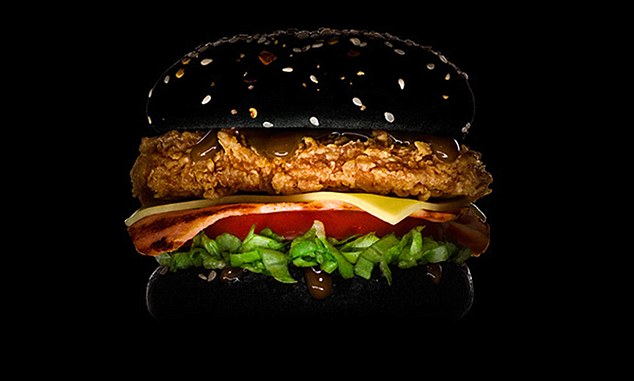
The less than subtle online advertisements show a burger that looks like it’s been forged in the fires of hell, with a lustrous teak-tough bun and the rest looking like some Pixar Studios creation of verdant lettuce and oozing juices.

The ‘black zinger’ itself is a chicken burger in a bun stained black with vegetable carbon. The bun is dotted with nigella seeds and in between is one of KFC’s trademark spicy chicken fillets, chilli flakes, lettuce, tomato, cheese, bacon and mustard & maple sauce.

Essentially it’s a chicken burger – that’s black.

There’s nothing else to it. That’s it.

Call it a triumph of advertising.

Anyway, you kind of expect franchise food to look nothing like the expertly cooked, photographed and tweaked version in the ads, but even so I was a bit underwhelmed when I opened the box.

I’ve become so accustomed to fancy burgers created with indulgent care that a production-line job just doesn’t seem to sit together right. The different elements are like a plastic toy that just slides apart, and that’s what the ‘black zinger’ looked like.

It’s a fair enough concept, even tasted good, but it lacked that personal short-order chef attention to detail to get it over the line.

The bun looked like sponge cake and was a little like sponge, the bacon didn’t look fried (baked, poached maybe?), the cheese wasn’t melted and the sauce was on the base rather than poured over the top.

Unfortunately for KFC to compete with the Juicy Lucy’s or the Mister Gee’s of the world it needs a guy or gal on a griddle toasting the bun and warming the cheese as it’s assembled and dousing it with sauce so the whole thing sits together properly. That’s something that in a high-turnover environment like the one they have, is not going to happen.

But the attempt to disrupt or, at the very least, ride on the coat tails of what is happening in the low-brow dining market shows that the big firms are worried and conscious that if they don’t change they risk losing the market.

Sex, lies & politics: The Peta Credlin – Tony Abbott ‘affair’

So were Tony Abbott and Peta Credlin at it?

The evidence ranged against them, one or two perceived moments of tenderness mostly not associated with a work relationship, a head rested on a shoulder, protective outbursts from the PM.

The rumour mills were so over-extended NSW Liberal MP Concetta Fierravanti-Wells felt the need to deliver an ultimatum to Abbott to deal with it.

“Politics is about perceptions,” she told him bluntly.

But should perceptions be enough to cost someone their job? And once it’s ‘out’ must the rumour-mongers be sated.

The question of sacking the Prime Minister’s chief of staff is a moot point now of course, but the ongoing damage to her career legacy is very much alive.

In the final days of the Abbott government, in the lead-up to that last brutal push to unseat him, it was not Abbott who was the target of the plotters.

He’d been given a walloping in the previous failed coup over the knighthood awarded to Prince Philip, weathered it and came back with an improved poll standing.

But when laying the groundwork for another go, it was Credlin who was identified as both the easier mark and the most effective means of undermining the PM.

She had directed his career from, at times, abject ineptitude in opposition to a decisive, commanding, if no-less controversial, presence in politics. He needed her there to govern.

The attacks on Credlin were almost nonsensical – an insult to the public intellect.

She was accused of having “too-high a profile” and the prime minister’s refusal to sack her for it was painted as being blinkered and an indication of internal rot.

Credlin was Abbott’s perceived Achilles heel –hurting her would leave him weaker.

Stubbornly, loyally he stuck by her. “Do you really think my chief of staff would be under this kind of criticism if her name was Peter?” he asked.

It was a good point.

In the UK, the close relationship between Tony Blair and his bullying mouthpiece Alastair Campbell didn’t produce calls for him to resign or be sacked. They too had a cosily iron grip on the agenda that left even the Treasurer on the outer. But Campbell was regarded as too dangerous to take on – a formidably strong lieutenant to the PM.

Credlin’s was a different story – she was a woman.

A seasoned political backroom operator she’d built a reputation in the Howard government as an astute strategist working for a number of MPs, then in opposition as top aide to Liberal leaders Brendan Nelson, Malcolm Turnbull and Abbott.

She had paid her dues many times over, and yet there have been fewer more transparent or malicious whispering campaigns carried out in politics than that on Credlin during the short reign of Tony Abbott.

The rumours about the pair had been the subject of gossip throughout politics and the media, but had never been aired publically until this week.

Privately Credlin was painted as a Delilah figure. She had her hooks in him, siren-like, fouling his judgment and poisoning his leadership.

I use that biblical comparison because the narrative of the scheming, manipulative women has been around for thousands of years. And it is routinely trotted out when critics can’t make conventional headway. See The Tragedy of Othello, Shakespeare knew it too.

In Australia we saw it with the jibes at Julia Gillard’s husband’s sexuality, and by association her own.

There is no question Credlin came to be widely disliked within the party and the control she exerted over the PM’s diary became a sticking point for many.

But the malignant undermining, the creeping, unsubstantiated sniggering at the morals of the government, went beyond all professional criticism.

I doubt there was any affair. This is politics and she was solely a means to get at Abbott.

What’s become of the supermodel? How social media undressed the fashion industry

Supermodels aren’t what they used to be. Really, not even close.

There was a time when to be a supermodel was like being one of the Seven Samurai, a catwalk A-Team or the fashion equivalent of Clive Lloyd’s West Indians of the 1970s – where every player was a star.

It was elite.

Way back in the golden era of supermodels in the 1990s it meant something different. The best models were cover girls for Vanity Fair, Vogue or later Sports Illustrated. They fought for those covers. It was a big deal. And they were distinct. They each fit a niche and in a way there differences complimented each other as well as the idea of beauty being diverse.

They also seemed to have more interesting lives, hailing from every corner of the globe, mixing with stars, musicians, artists, clubbing at Studio 54, marrying tycoons and divorcing them.

Today’s supermodels are stars of social media, their currency measured in followers and shares, and the iconic images by photographers like David Bailey, Mario Testino or Annie Leibovitz replaced with a selfie from an iPhone 6.

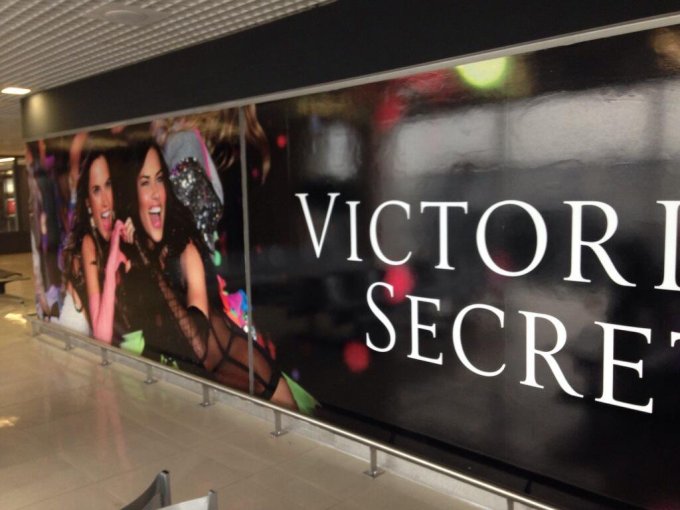
In fact the term doesn’t really mean anything anymore. In today’s parlance anyone who’s earnt their ‘wings’ as a Victoria’s Secret model is dubbed ‘super’.

And the lingerie firm and its online following has set the agenda for what a supermodel should look like – a kind of pornified girl next door – pouting, fair-skinned and up for a party.

Elegance? What’s that.

The progression of modelling through the latter part of the 20th century to today from overwear to swimwear to underwear (heading to no wear) has been driven by the internet and the easy sexualisation of both women and men that has come with it.

You don’t hear much about former supermodel Cindy Crawford anymore, but last week she quietly announced her retirement.

It’s an entirely different ball game today and she knows it, no matter how stunning she still looks at 50.

In her, not that distant, heyday though she shared a world stage with Claudia Schiffer, Tyra Banks, Gisele, Elle MacPherson, Christie Brinkley, Naomi Campbell, Rachel Hunter, Linda Evangelista, Heidi Klum, Eva Herzigiova, Kate Moss and Helena Christensen.

These women strode like giants through the industry, having emerged from an even more elite pack of high fashion models like Lauren Hutton, Iman, Jerry Hall, Janice Dickinson and Marie Helvin.

The emphasis throughout all their careers was on the vast wealth of the fashion industry, of magazines and their influential owners, and on the power of good photography.

But magazines, the patrons of fashion photography, are now struggling, and Harper’s Bazaar’s nude cover of Miranda Kerr in December reflected how heavily the internet and social media now influence the mainstream industry.

And the new star supermodels – Kendall Jenner, Kate Upton – are bypassing traditional modelling routes, coming to the game as social media ’influencers’.

To advertisers their Instagram accounts are the new rivers of money, where brands can be sold direct to the public.

And maybe this is a better thing for giving models – so long at the beck and call of an unforgiving industry – more control.

But when I hear the term ‘supermodel’ mentioned in relation to a rising social media star I’ve never heard of, or Miranda Kerr or Rosie Huntington-Whiteley while they strain desperately to find some grown-up curves, or just to stumble across a billboard of homogenous looking Victoria’s Secret ‘Angels’, I do yearn for the day when you knew what you were getting in a supermodel and invariably it was awesome.

Women are from Venus, Men are from Tatooine – what Star Wars says about love

Star Wars is a romantic turn-off and a relationship killer, according to the experts – but only to women.

Those schoolboy crushes on Carrie Fisher cavorting about in her gold bikini were fine for males of a certain age, but most women don’t want a bloke to be still going on about it in his 40s.

On the eve of the release of Star Wars VII: The Force Awakens, Zoosk, a dating site, asked people about their attitudes to the films and romance, probing that nerdish fascination many, normally right-thinking, men exhibit for the space epic.

And while it seems that women are from Venus, a lot of men apparently hale from Tatooine rather than Mars.

The poll of 1000 people found a quarter of Australian women would not go out with a Star Wars fan, one in three avoided them and another 40 per cent would try to change them if they were in a relationship. Furthermore, a bloke with Star Wars bedsheets (and, yes, we are talking about adults here) was unsurprisingly an absolute passion eviscerator for two out of five women.

In stark contrast 55 per cent of men said they would jump at the chance to sleep with a woman who believed in the Force (…we can add that to all the other stuff we don’t understand about each other).

Now, I know both couples who turned their weddings into Star Wars-themed events and mates whose intended vetoed the same. So there is proof Star Wars diehards are breeding.

But as a bellwether for relationships the film was always going to be an awkwardly complicated thing. I mean, there was that Luke and Leia thing early on. Thank God someone set them straight. They could have had a two-headed Jedi child.

Queen Amidala and Anakin – bloody and destined to fail in a Game of Thrones-type way. Even Luke’s aunt and uncle – his parental role models – got burnt to death by stormtroopers. Grisly.

In fact droids R2D2 and C3PO seem to have had the most close-to-stereotypical relationship in the films, one marked by attachment, bickering and no sex (that we know of).

But what does all that say about men and women?

Why as men are we more inclined to escape into Star Wars, or cars, or sport, or gambling or drinking?

Are the pressures of the world so great we turn escapism into a lifestyle?

And is that what the turn-off to women is? Not so much the nerdiness, but the lack of focus on stuff that matters and on getting things done.

So as you sit in the darkness of the cinema watching Star Wars VII blast across the screen – and most certainly not thinking about your career, or your family or what Syrian refugees will be doing this Christmas – ponder for a moment at least what it’s doing to your love life.

Agile outcomes & keeping your place at the table: Lessons from HackFood 2015

It was late in the afternoon of Day 3 at HackFood 2015 that my moment of clarity pivoted for, what proved to be, the final time.

The weals on the back of the crumpled print-out of the lean canvas were testament to how often it had been ‘gone over’ and ‘last’ reckonings scratched out.

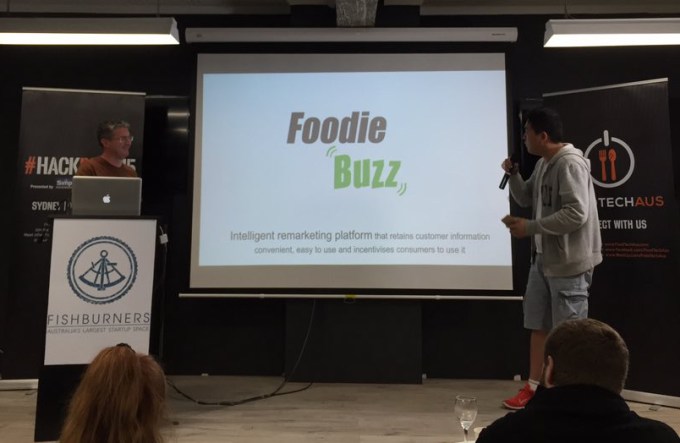
Our FoodieBuzz app had been socialled within an inch of its life, promos made and terminated and the pitch turned on its head from a platform for customer acquisition to customer retention.

Epiphanies generally strike once and are final, but when you keep turning inside out an idea, until a new beast emerges that is different enough to stand on its own, those moments arrange themselves in a thread made of compromises, insights and brutal reasoning.

Held at Fishburners in Sydney’s Ultimo by FoodTechAus, HackFood was a case in point – a mongrel dog of DIY and vision for sale.

The first food tech industry hackathon in Australia, it came with a rough agenda and loads of enthusiasm.

But anyone expecting coruscating wisdom to kickstart a new and unique product were set straight on the first night when a succession of similar pitches strained to uniquely distance themselves from products already in the marketplace.

The 24 60-second proposals on day one boiled down to 12 teams formed in a loose endosmosis of like minds, and by the end of that first evening one team (maybe the best) was already gone – Skipper Dan (direct-to-market seafood sourcing), hooked by one of the industry ‘observers’ that came along on the first night to find something that could be sold and spirit it off.

Most products took their cues from known applications. Old ideas repackaged, re-angled from impossible expectations to mundane reality. It was all about redefinition and agility in an industry still slow coming off its mark into a digital today.

By the end of the weekend Chewsr, a menu ordering app that narrows choice rather than expands on it, had won the taste test. A cattle temperature monitoring device and app to stop cows getting sick in container ships was the even more prosaic runner-up.

The lessons were clear: Small ideas not big, simplicity over complexity, the quickly achievable over the problematic, take what works and make it better, or different enough to find its own stream of custom.

The market, as often as not, is your competition and your rival may become your investor or your buyer.

Cannibalisation by established firms is the chief threat to this way of thinking but the ability to redefine your goals without flipping the logic behind them keeps your place at the table.

And in food tech that is the only game in town.

Serena’s simply the best – across all tennis

She’s the best tennis player of her generation.

And I’m not just talking about the women’s game. It’s not just Sharapova or Clijsters or Henin or her sister Venus she has trumped. Serena Williams has made the men’s champs Federer, Nadal and Djokovic look like also-rans.

She’s better than the lot. And it’s time she got some love.

Serena now stands on the verge of being the greatest player of all time as she attempts to win a calendar grand slam at the US Open in eight weeks’ time, which will equal the record of Steffi Graf and put her two away from reeling in Margaret Court.

Few doubt she will do it.

Despite this, the women’s world number one has rarely been a favourite with the crowd or the media.

She’s familiar with the fact the fans are more often on her opponent’s side — the underdog. She has taken the jibes about her muscularity, knowing that many tennis fans seem to think she has an almost unfair physical advantage.

And through all that, though it must have rankled, she has remained gracious and good-natured.

When the Williams sisters burst on the scene, they were given plenty of stick. As the two softly-spoken girls from Florida cut a swathe through the mostly white ranks of the professional women’s circuit there was an edge of panic in the media and the establishment.

It was rarely verbalised but the underlying issue was race. Was this the point where the prowess of black athletes transformed the sanctity of a comfortably closed shop for white people? Like the 100m sprint at the Olympics, like the ranks of the heavyweight boxing champions once dominated by preternaturally large Italians, Jews and Irish. The same went for Tiger Woods and golf.

It was given voice at the 2001 Indian Wells Masters when the crowd turned on Serena and her family in the gallery. After Venus withdrew from her match with an injury, father Richard was accused of pulling her out so Serena could win. The sour grapes that bubbled beneath the surface vented spitefully and unfairly. The mask dropped. The sisters boycotted Indian Wells.

In the media, Richard was portrayed as a stage parent, living out his dreams through his children, driving them obsessively. Even his presence with wife Oracene at their matches was questioned, with the implication he had too much control over his prodigious daughters.

Though it seemed from the outside to be a close, stable, loving family, efforts were made to destabilise that and to bring the Williams sisters down a notch.

The dynamic of their relationship was also brought into question. ‘They were rivals who hated to lose to one another’. Venus, who initially was the dominant player of the two, was said to be ‘hurt’ by her little sister’s success.

And all of this bedded in over time.

Venus ultimately became more accepted the more she lost. Her tally of seven grand slams, while incredible, would never threaten the established hegemony in tennis.

But Serena didn’t stop, she went on winning.

Unlike the other top tennis players, she picked and chose her events with an eye more on the quality of her own life. She avoided much of the WTP tour to pop up at a grand slam and take it home with her. In the past 15 grand slams she has won eight. Only Federer’s run of 11 in 16 between 2004 and 2007 is better in the modern era.

With her Wimbledon win she became the oldest woman to hold all grand slam titles simultaneously.

And yet it is not even the records, but her manner of winning that has set her apart — speed on the court, agility, strength and more than anything, grit.

(Originally published in RendezView)