The rime of the Australian ball tamperer

Like the ancient mariner Trevor Chappell finally emerged this week from his decades-long exile of public opprobrium to pass on his curse.

With a glittering eye the villain of the underarm bowling incident of ’81 gleefully announced he was no longer the most hated man in Australian sport.

He cast it off, more happy to be rid of the albatross around his neck than sorry for what awaited the disgraced Australian cricket captain Steve Smith.

Smith, the player feted as our greatest batsman since Don Bradman, this week held two of the worst press conferences of his life.

Naively thinking a manly admission of guilt could get him ahead of the controversy, he set off.

He’s not good at facing the press anyway, but even by his lacklustre standards the train departed the station and promptly derailed.

By week’s end Smith had reverted to a boy, bawling his eyes out and blubbering for forgiveness from a steely public that had already made up its mind.

The brightest star, and future of the country’s Test team, had lost sight of the gap between perception and reality.

For the truth is there are 101 ways to cheat at cricket and pretty much everyone has done it.

The national team’s ball tampering is in the headlines, but the message to take whatever advantage you can in the game begins at an early age.

In under 16s cricket, playing in the local final, I remember the opposition coach beating the ground violently with a mallet and screaming at his young charges when they failed to slow down the game enough, allowing another over that saw us tie with them. Before that, they had run down the clock with their time-wasting, strangling our opportunity to win.

You can call that tactics, but it’s not sporting. It wasn’t fair.

Playing grade cricket, where you often have to double up as an umpire adjudicating against your own players, I learned fast: Don’t ever give an lbw.

Having raised the finger to my own captain when he was struck plum on the pads, cowering against the stumps, I got the mother of all dressing downs in front of the team back on the sidelines.

And, when it was my turn to bat, my aggrieved teammate came out to umpire and immediately gave me out, caught, even though the ball had sailed past my bat without a connection. He’d asked one of the opposition players (who was happy to oblige) to appeal the first ball I swung at and missed.

It was an important lesson. Cricket is firstly about winning and secondly about loyalty to your team. Not honour. Not fair play.

It’s treated that way by everyone involved, from the grounds staff that prepare a pitch to favour the home side to the deliberate scuffing of the ball to achieve swing; the sledging that greets a new batsman at the crease, or the unwillingness to walk when you’re out.

It’s just not cricket!

Well, it is actually. That’s very much what cricket is.

And it is against that background that our national team has come unstuck.

There is a gaping chasm between public perceptions of the game and an often brutal reality. The same reality that saw cricket arrogantly close its ranks at the inquest into Phillip Hughes’ death. Nothing to see here.

Everything that has happened in this past week has clung to that ethos.

The decision to rough up the ball with sandpaper (why on Earth choose bright yellow?), the man-child captain invoking a mysterious ‘leadership group’ to explain away his decision.

It would be churlish to cite the numerous examples of cheating in international cricket, the match fixing, the drugs, the slinging.

Or, even just the huge level of hypocrisy exhibited in the comments of some former players who are no saints themselves.

The cheats’ wheel of misfortune has landed on most countries, and now it’s our turn.

A sadder and a wiser man, Steve Smith has learnt it the hard way.

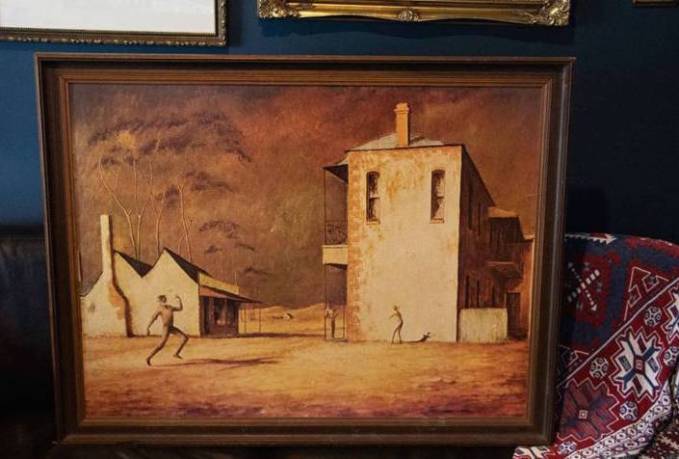
(Originally published in The Daily Telegraph. Painting: The Cricketers by Russell Drysdale)

Taking the Lucky Country for granted

There’s a skit the British comedian Michael McIntyre does about disabled parking spaces.

As non-disabled motorists cruising for an elusive spot we tend to look ruefully at those often empty reserved spaces right in front of the shops. And sometimes scrutinise those parking in them to satisfy ourselves they are legit.

“What do we want?” asks McIntyre. “For the door to open and a minute-and-a-half later someone falls out.” He then starts crawling across the stage shouting ‘get me a trolley’.

Peter Dutton’s comments on the Manus Island refugees who flew into New York this week (as part of the deal with the US), wearing sunglasses and looking like tourists, fell into the same basket.

“They’re economic refugees,” he told 2GB. “They got on a boat, paid a people smuggler a lot of money, and somebody once said to me that we’ve got the world’s biggest collection of Armani jeans and handbags up on Nauru waiting for people to collect it when they depart.”

Perhaps he wanted them in rags, walking on crutches… emaciated.

The detention centres in the North Pacific are certainly not holiday camps and even if you’re in agreement with the Manus and Nauru detainees being denied entry to Australia, it’s no time to gloat.

Weighing up the cost of compassion is very different from just being self-righteous.

It’s easy in the affluent country we live in to pontificate about economic refugees and how they don’t deserve what Australia has on offer because they weren’t born here.

Nevermind that our own birthright is a quirk of fate.

I commented to a colleague recently: ‘It’s good being a white bloke.’ He thought about it for two seconds and agreed.

If you’re a ‘white bloke’ born into the middle classes of Australia it doesn’t get much better.

You aren’t born smarter, you aren’t more able. But your path through life inevitably is smoother than if you were born black, or poor, or a woman.

In Australia we have developed an enormous sense of entitlement. We sneer at the poor and dispossessed, blame them for their own misfortune and equate worth with earning potential.

Throughout the 20th century, as immigration became the norm, it was de rigueur to refer to any immigrant or their offspring with some derogatory term, whether it was dago, or slope or Pom. Each new wave of migrants copped it. Each was made to feel that they hadn’t earned the right to be here.

The term ‘assimilation’ has been used like a blunt object to batter people into conforming and often renouncing their own heritage.

How many people do I know who became ‘proper Aussies’ never speaking of their background, brought up with that ignorant, spiteful word ‘wog’ ringing in their ears? Too many.

I’d ban it. Make it a hate crime. Make it like the ‘n’ word.

The ‘w’ word.

The children of immigrants in this country, who were bullied and belittled, will never get an apology. And what lesson did it teach us as a people?

Now, as we trade away human beings to Donald Trump like the unwanted assets of a shop liquidation, let’s not lower ourselves any further.

We are the Lucky Country, but we’ve forgotten what that means. Luck is not about being deserving, it’s providence — a cosmic flip of the coin.

We should never forget that.

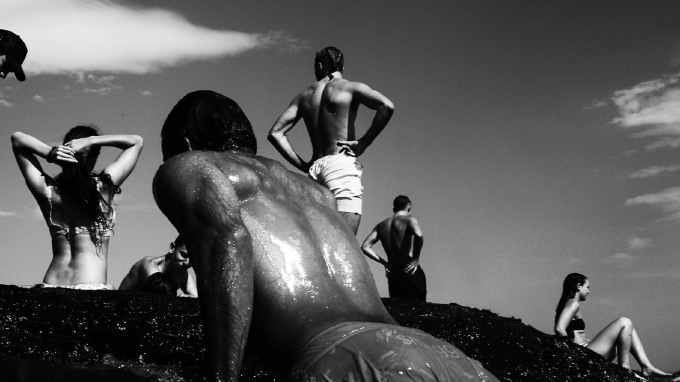
(Originally published in The Daily Telelgraph. Photograph by Paul Blackmore.)

No Australian should stand for inequality

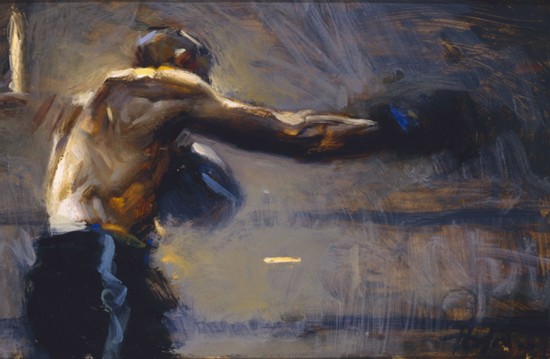
Trash talk precedes most big fights. Boxers have to sell seats and the more bums on them the better their payday.

Anthony Mundine’s no stranger to that. He’s been stirring the pot his whole career, drumming up business, psyching out his opponents, giving the public the loud mouth anti-hero some genuinely hate, while others look beyond the words to the fighter, the athlete.

Unlike most scrappers, though, Mundine has rarely wasted these opportunities (which are fewer and further between for him) by talking up simple rivalries.

Five years ago he caused controversy by disputing fellow boxer Daniel Geale’s very Aboriginality.

There has never been anything mundane about Mundine.

Instead he’s used that time as a platform to push debate around indigenous life and to hopefully change it for the better.

He has vowed to sit down during the playing of the national anthem at his rematch with Danny Green on Friday night, calling it “disrespectful” to his people.

And as an Australian, let alone an Aboriginal one, he has every right to do that.

If, as is mooted, promoters get around this by having the anthem played before he enters the ring it would be another stain on this country’s already tarnished history of race relations.

It would be a greater disgrace than what some perceive is Mundine’s snub to Advance Australia Fair.

Mundine should absolutely be allowed to get in that ring and sit on his seat while the anthem is sung. As the headlining boxer he deserves to have that moment – to be more than a piece of meat, making a small fortune for the promoters.

He deserves to be able to rankle the masses and let them know where he stands as an individual, and maybe make them think a bit longer about what it really means to be Australian – both white and black.

Our headlining Aboriginal sportsmen are the ones who get the most column inches when they speak on these issues, even though they are shouted down.

Adam Goodes, one of the most eloquent sports people when talking about racism and the toll of white Australia on native Australians, has paid the price. Derided, bullied, beaten down.

The fact of the matter is there has never been a level playing field for Aboriginals and Torres Strait Islanders in Australia, and we have a long way to go before we get one.

It is not, as Barnaby Joyce insists, about having to say ‘sorry’ for ancestors like his who came to the country as immigrants and had nothing to do with colonial massacres.

It’s simply about recognising things are not fair and working towards making them so.

It’s kinda in the title: Advance Australia Fair.

Only the anthem doesn’t mean ‘fair go’ it means things being nice, good, palatable.

Well it’s not ‘nice’ that indigenous Australians live on average 17 years less than non-indigenous. Nor is it ‘good’ that Aboriginal women are 58 times more likely to be held in police custody than white women. It’s not ‘palatable’ that suicide rates among the indigenous population are three times higher than for everyone else. It’s certainly not ‘fair’.

That’s not the fairness Australia is meant to be about. It’s meant to be about equality.

Equality for blacks and whites, for Asians, for women, for gays and anyone else born with the same irrefutable rights as the next person.

Mundine will continue taking the hits and speaking his mind. And I hope for all Australians, come Friday, that he is allowed to sit on his stool as the anthem rings out and make his point.

That would really advance Australia fair.

Is Australia racist? Anthony Mundine says ‘Yes’

He boastfully calls himself ‘The Man’ – it oughta be ‘The Mouth’.

Australia’s most controversial sportsman, boxer Anthony Mundine, has a track record of putting his foot in it or, in the Aussie vernacular, shit-stirring.

Accused of racism himself in the past week for effectively telling a fellow Aboriginal boxer that he wasn’t black enough, Mundine came out and laid all his cards on the table over the issue.

The country itself was racist, its institutions were racist and its flag and its anthem excluded Aboriginals, the 37-year-old claimed.

It was the kind of red rag to a bull remark that Mundine is good at making.

In Australia, where he polarises opinion between those that can’t stand that ‘big mouth’ and those who admire a talent that’s seen him win three world titles at two weights, reaction to his comments was quick and mostly negative.

‘Below the belt’ opined one article, focusing on his ill-chosen words to rival boxer Daniel Geale, while an Aboriginal campaigner rather hysterically branded him a ‘neo-Nazi’.

The much-liked Geale, the current WBA and IBF middleweight champion, is a descendent of Tasmanian aborigines, most of whom were wiped out in the 1830s in perhaps the most near to comprehensive genocide ever pursued against a people that we know of.

Mundine at first disputed if there was such a thing as a Tasmanian Aborigine because of that genocide, but later retracted his remarks.

He was accused of shock tactics and several of his sporting peers, Aboriginals included, denounced him and trumpeted the usual line that he should just play his sport and keep his mouth shut.

But Mundine didn’t back off too far and used the opportunity of apologising to turn the accusations around and launch an embarrassing attack on his country’s race record.

In a counter move similar to Australian PM Julia Gillard’s own recent robust attack on the Opposition Leader Tony Abbott’s alleged ‘misogyny’, Mundine told reporters: “Everyone that comes here, and a lot of my close friends and family members, we feel that Australia is one of the most racist countries.

“I want to move forward, I want to unite the people.

”We’ve never had any representation on the flag, yet I see representation of the Union Jack, something that symbolises the invasion, the murder, the pillaging, and on and on. I think we need to address that – it’s dividing Australia, rather than uniting Australia.

“At the moment, I can’t fly it. And I want to fly the Australian flag. I want to fly it for the Australian people. But let’s do it together.”

He went on to describe the national anthem, Advance Australia Fair, as a legacy of the White Australia policy.

He added: ”I think that we need to move forward together, unite together, move forward as people, move forward as Australians, no matter what you are – brown, black, brindle, white – and move forward together.”

What of those comments though? And how valid are they?

Australia’s Aboriginal population is relatively small, 517,000 at the last census, about 2.5% of the population**, with three-quarters residing in cities and country towns, while 25% live in remote communities.

Despite a decent welfare system nowadays the life-expectancy of Aboriginals is about 17 years less than the national average*, a statistic that is twice as bad as comparable nations with an indigenous population.

Unemployment among Aboriginals is three times higher than the non-indigenous population** and Aboriginal women are 58 times more likely to be held in police custody than non-Aboriginals – for Aboriginal men it is 28 times higher***.

Alcoholism, drug abuse, domestic violence and, in some communities, child abuse are endemic problems. The rate that Aboriginals are admitted to hospital, commit suicide or are diagnosed with mental health problems or disease is between two and three times higher than the non-indigenous population****.

All of these facts point to problems that are either not being addressed properly or not being addressed at all.

And the level of indifference to Aboriginals by the non-indigenous population has only begun to turn around in the past decade or two.

In Australia a national Sorry Day has been held every year since 1998 and four years ago the then prime minister Kevin Rudd apologised in parliament for laws and policies that “had inflicted profound grief, suffering and loss” for Aborigines. The previous incumbent John Howard had refused to make an official apology and was backed by about one in three Australians.

Foremost in Rudd’s mind was the controversy over the ‘stolen generation’ of children.

In reality the term used to describe them represented many generations of Aboriginal children, forcibly taken from their families from the 1900s to the 1960s and given to white families to raise in a heartless and bureaucratic attempt at integration.

But the apology was also for the numerous bloody, one-sided massacres committed by settlers, whalers, sealers, police detachments and the British armed forces, carried out since the early days of colonisation right up until the late 1920s.

While the benefits system is now supportive of Aboriginals, they were not entitled to a pension and other welfare until 1959.

It was not until 1962 that Aboriginals nationally were given the right to vote and it was only made compulsory, in line with the non-indigenous population, in 1983. There were bans on Aboriginals entering some town centres, right up until 1948 when the Western Australia capital Perth finally relented.

Among Mundine’s incendiary comments was the claim that Geale didn’t represent the Aboriginal community, citing his ‘white’ wife and kids.

He told a press conference for the fight: “I don’t see him representing black people, or coloured people. I don’t see him in the communities, I don’t see him doing the things I do to people, and fighting for the people. But he’s his own man. He’s got a white woman, he’s got white kids. I keep it real, all day every day.”

To outside observers it was a bit like Muhammad Ali’s portrayal of Joe Frasier and George Foreman as white stooges, part trash talk, but with the kernel of a real issue buried far beneath.

Explaining it later he added: “I wasn’t attacking her (Geale’s wife), or attacking her race. My outlook is, as an Aboriginal man, our people, we’re probably the most endangered species. We’re a dying race, and we’ve just got to embrace our sisters. There’s too many footy stars and too many other stars in powerful positions that don’t. And I don’t know why. That’s how we’re going to keep our people going.’

“Our women are the backbone of our community, and the Aboriginal community is weak if our women are weak, we need to bring our women up with us and embrace that.

“Our mortality rate is far worse than our birth rate. We are probably one of the only races on Earth like that right now.”

As crass as it seemed to direct those comments at the amiable Geale it was the type of view once espoused in 1960s America by Black Power activists – respect the sisters, nurture your own race, don’t fall victim to trying to meet the expectations of the majority.

Mundine has been attracting attention since the early 90s when he had his first amateur fights aged 17.

A top junior rugby league player at the time he was also the son of Tony Mundine, a fearsome hard-hitting Aboriginal middleweight boxer who had fought the legendary Carlos Monzon and ‘Bad’ Bennie Briscoe among others.

From an early stage in his life there was some air of anticipation about what Anthony Mundine would achieve, having already been earmarked as a gifted athlete in at least three sports (there was talk of him playing in Australia’s National Basketball League).

Since those early mutterings of potential Mundine’s won 44 fights and given up a successful career in rugby league, where he represented NSW in the game’s teak-tough State of Origin series.

He’s now 37 and, perhaps too late, is trying to attract some big money fights in the U.S. where it’s taken more than a decade for the heat to go out of acrimony at remarks he made blaming the country’s foreign policy for the 9/11 attacks.

And the Mundine mouth has continued to see the boxer run foul of the press and public.

But Aboriginal Australians need champions and not just successful sports people that tick all the right boxes for the white community. They need individuals with a profile that are prepared to speak up.

Mundine may not be the most eloquent orator, and he may not be the obvious choice as a mouthpiece for political change in Australia, but maybe he has a decent point or two to make.

Does that dour Federation-era anthem reflect anything about Australia today?

Should the country keep flying one of the many identikit flags that dot the South Pacific featuring the Union Jack in the top corner?

And do its people care enough about the Aboriginals to improve their life expectancy and their general well-being to a point equal to their own?

National Sorry Day (now called the the Day of Healing) is worth nothing if it’s just an apology for a distant past.

If Aboriginal kids continue to grow up with few opportunities and little self-esteem what good is saying ‘sorry’ to make ourselves feel better?

More people like Mundine are needed to start talking about solutions.

And not just Aboriginals – white folk too.

* Australian Institute of Health and Welfare

** Australian Bureau of Statistics

*** Australian Institute of Criminology

**** The Medical Journal of Australia

(Originally published in The Huffington Post)