It was the classic Game of Thrones twist that hooked millions of people around the world.
Author George R.R. Martin was adept at building up a character, dropping them in a life threatening situation, offering hope they would escape, then withdrawing it – bloodily.
It happened in the very first episode when Bran was pushed from the tower and continued on its merry way through the execution of Ned Stark, the red wedding and the murder of Jon Snow.
But without Martin’s books as a guide the last two series have been more Lord of the Rings – predicatable and shockless – with the final episode seeming little more than a set-up for a sequel.
The real Game of Thrones moment, the gut-churning twist, the realisation of loss and betrayal Australian fans had sought from the show, came instead on Saturday night – in real life.
As incumbent PM Scott Morrison carried the field in the 2019 federal election, millions of voters anticipating a Labor win looked on in horror.
With bad result after bad piling up around him, quickly and brutally Bill Shorten’s run at leading the country slid inexorably into the abyss.
The celebrations of gleeful Coalition voters felt as painful as watching Robb Stark’s headless body paraded around on horseback. The King of the North.
Shorten, the king of the working class, was just as dead – politically.
In the lead up to the election, it had misleadingly seemed as though everything had gone right for Labor and Bill.
A usually reliable measure of preferences, the leaders’ debates had been twice won by Shorten, clearly.
Even a story suggesting he was misusing his mother’s memory backfired, turning into a ball ache for the Liberals.
Most deaths are regarded as untimely, but the passing of widely-revered former PM Bob Hawke was the opposite. It was incredibly timely. And it seemed to augur success for Labor.
With Paul Keating, Hawke had come out two weeks before to endorse Shorten and a Labor ascendency.
But while Bob’s death wiped a number of anti-Shorten stories off the front pages of the next day’s papers, it may also have acted as a reminder to voters how underwhelming the Labor leader was compared to the greats of the past.
The Coalition had its own moments of luck. An egg aimed at the PM hit but did not break. For God-fearing Morrison, the unexpected recipient of the leadership after Peter Dutton’s failed tilt, it was another miracle, ahead of his ‘miracle win’.
But despite an uncomfortably narrow two per cent lead in the two party preference vote, the media almost unanimously predicted a Labor victory.
Post-election it then turned around to unanimously blame the pollsters rather than its own analysis for getting it wrong. A repeat of the Trump victory. Of Brexit. Of Gladys.
The media has grown fond of asking this question: Can polls be trusted?
Unfortunately, what has been repeatedly revealed is the mainstream media’s inability to analyse accurately.
It’s nothing unusual, factoring in protest voters and those who haven’t thought about it hard yet, that a two per cent poll lead can evaporate or be reversed. That’s all John Hewson had when he went into the ’93 election as favourite and got thumped by Conservative Australia, not prepared to cast their votes for the GST.
An insider in the Liberals’ campaign team told me it had been a source of constant incredulity within the party how wrong the media’s interpretation had been over the past few weeks.
“We focused on 10 key seats in every state, winning those,” she said. “The strategy was clear and we knew the polls were misleading. We were still strong in the first party preferred vote and our own polling showed that seat by seat we could win. Although, we believed by only a narrow margin.”
She added: “We couldn’t understand the single-focus of most of the media on the national poll trend. They just didn’t look beyond it. Nor did they listen.”
So Scott “The Accidental PM” Morrison, now has a genuine mandate to roll out his policies, while fans of fantasy adventures are reminded life provides enough of its own bitter pills to swallow.
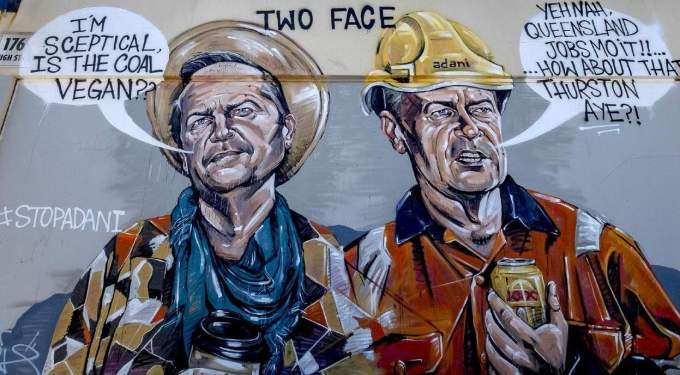
Picture: Street art in Melbourne
 rtg
rtg 