Like the ancient mariner Trevor Chappell finally emerged this week from his decades-long exile of public opprobrium to pass on his curse.
With a glittering eye the villain of the underarm bowling incident of ’81 gleefully announced he was no longer the most hated man in Australian sport.
He cast it off, more happy to be rid of the albatross around his neck than sorry for what awaited the disgraced Australian cricket captain Steve Smith.
Smith, the player feted as our greatest batsman since Don Bradman, this week held two of the worst press conferences of his life.
Naively thinking a manly admission of guilt could get him ahead of the controversy, he set off.
He’s not good at facing the press anyway, but even by his lacklustre standards the train departed the station and promptly derailed.
By week’s end Smith had reverted to a boy, bawling his eyes out and blubbering for forgiveness from a steely public that had already made up its mind.
The brightest star, and future of the country’s Test team, had lost sight of the gap between perception and reality.
For the truth is there are 101 ways to cheat at cricket and pretty much everyone has done it.
The national team’s ball tampering is in the headlines, but the message to take whatever advantage you can in the game begins at an early age.
In under 16s cricket, playing in the local final, I remember the opposition coach beating the ground violently with a mallet and screaming at his young charges when they failed to slow down the game enough, allowing another over that saw us tie with them. Before that, they had run down the clock with their time-wasting, strangling our opportunity to win.
You can call that tactics, but it’s not sporting. It wasn’t fair.
Playing grade cricket, where you often have to double up as an umpire adjudicating against your own players, I learned fast: Don’t ever give an lbw.
Having raised the finger to my own captain when he was struck plum on the pads, cowering against the stumps, I got the mother of all dressing downs in front of the team back on the sidelines.
And, when it was my turn to bat, my aggrieved teammate came out to umpire and immediately gave me out, caught, even though the ball had sailed past my bat without a connection. He’d asked one of the opposition players (who was happy to oblige) to appeal the first ball I swung at and missed.
It was an important lesson. Cricket is firstly about winning and secondly about loyalty to your team. Not honour. Not fair play.
It’s treated that way by everyone involved, from the grounds staff that prepare a pitch to favour the home side to the deliberate scuffing of the ball to achieve swing; the sledging that greets a new batsman at the crease, or the unwillingness to walk when you’re out.
It’s just not cricket!
Well, it is actually. That’s very much what cricket is.
And it is against that background that our national team has come unstuck.
There is a gaping chasm between public perceptions of the game and an often brutal reality. The same reality that saw cricket arrogantly close its ranks at the inquest into Phillip Hughes’ death. Nothing to see here.
Everything that has happened in this past week has clung to that ethos.
The decision to rough up the ball with sandpaper (why on Earth choose bright yellow?), the man-child captain invoking a mysterious ‘leadership group’ to explain away his decision.
It would be churlish to cite the numerous examples of cheating in international cricket, the match fixing, the drugs, the slinging.
Or, even just the huge level of hypocrisy exhibited in the comments of some former players who are no saints themselves.
The cheats’ wheel of misfortune has landed on most countries, and now it’s our turn.
A sadder and a wiser man, Steve Smith has learnt it the hard way.
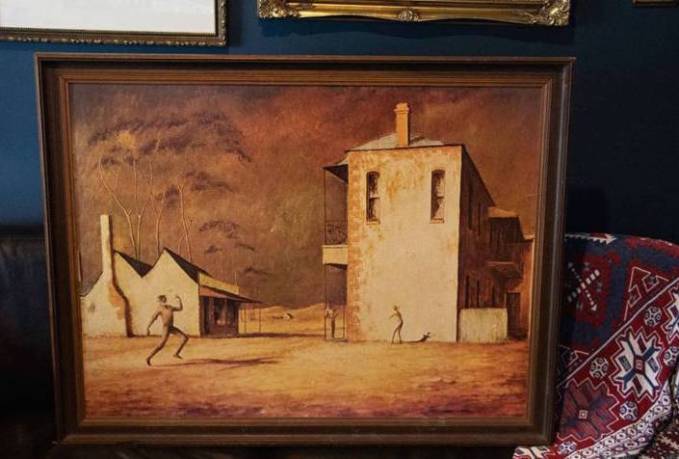
(Originally published in The Daily Telegraph. Painting: The Cricketers by Russell Drysdale)

 rtg
rtg 